CAN THO CITY DEPARTMENT OF SCIENCE AND TECHNOLOGY
Não bộ càng lớn, tay càng khéo léo
Các nhà khoa học ở Đại học Zurich phát hiện ra rằng kích thước não bộ có liên quan tới mức độ khéo léo của đôi bàn tay.
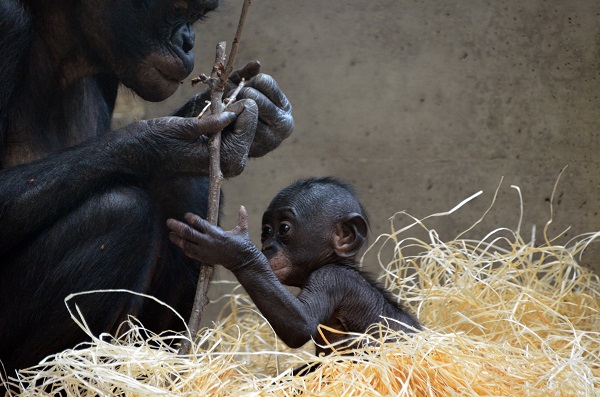
Các loài vượn lớn, ví dụ như tinh tinh lùn, có bộ não lớn giống như người và có thể học được các kỹ năng vận động tinh (kỹ năng sử dụng các cơ nhỏ điều khiển bàn tay, ngón tay). Ảnh: Sandra Heldstab, chụp tại Vườn bách thảo Wilhema, Stuttgart, Đức.

Con người có đôi tay khéo léo, song lại mất khá nhiều thời gian để học kỹ năng dùng bàn tay. Thông thường, trẻ cần khoảng 5 tháng mới cầm nắm được đồ vật theo ý muốn. Các kỹ năng phức tạp hơn, chẳng hạn như học cách ăn bằng dao, nĩa hoặc buộc dây giày có thể cần năm đến sáu năm nữa. Ở độ tuổi đó, nhiều loài linh trưởng đã có con rồi. Tại sao con người lại cần quá nhiều thời gian hơn các họ hàng gần gũi nhất để học các kỹ năng vận động tinh?

Để trả lời câu hỏi này, nhà sinh học tiến hóa Sandra Heldstab và các đồng nghiệp tại Đại học Zurich đã tiến hành quan sát 36 loài linh trưởng trong khoảng thời gian hơn 7 năm. Heldstab đã nghiên cứu 128 con non tại 13 sở thú ở châu Âu từ khi chúng vừa chào đời tới độ tuổi mà chúng đạt được kỹ năng dùng tay của con vật trưởng thành. Điều khiến nhà nghiên cứu ngạc nhiên là tất cả các loài được nghiên cứu đều có trình tự học các kỹ năng dùng tay tương ứng giống hệt nhau.

Não bộ càng lớn, con vật càng khéo tay

Tuy nhiên, các nhà nghiên cứu cũng đã phát hiện các cá thể trưởng thành thuộc các loài linh trưởng khác nhau có sự khác biệt lớn về kỹ năng vận động tinh cụ thể. Các loài linh trưởng có bộ não lớn như khỉ Macaques, khỉ đột hay tinh tinh có thể sử dụng tay để thực hiện các tác vụ phức tạp hơn các loài có kích thước não bộ nhỏ hơn như vượn cáo hay khỉ đuôi sóc.

“Không phải ngẫu nhiên mà con người rất giỏi trong việc sử dụng tay và các công cụ lao động. Bộ não lớn đã giúp chúng ta làm được điều đó. Kích thước não bộ lớn sẽ tương đương với độ khéo léo”, Heldstab nói.

Và cái phải trả cho sự khéo léo này chính là khoảng thời gian rất dài để học được các cử động ngón tay và bàn tay đơn giản nhất. Các nhà nghiên cứu cho rằng nguyên nhân có thể là do bộ não của con người chưa phát triển đầy đủ khi mới chào đời.

Bên cạnh đó, nghiên cứu cũng một lần nữa khẳng định rằng trong suốt lịch sử tiến hóa, chỉ có động vật có vú sống đủ lâu và có đủ thời gian để học hỏi mới có thể phát triển kích thước não bộ lớn và các kỹ năng vận động tinh phức tạp, bao gồm khả năng sử dụng các công cụ. Điều này lý giải hầu như không có loài vật nào có thể phát triển được theo con đường của loài người và vì sao con người trở thành sinh vật có kỹ thuật cao nhất trên Trái Đất.

Nguồn: https://medicalxpress.com/news/2020-07-big-brains-dexterous.html

Công Nhất theo medicalxpress

khoahocphattrien.vn (vtvanh)
Most viewed news

Apple Plans to Transform Siri into a Chatbot

Apple is reportedly preparing a major upgrade for iOS 27 and macOS 27, with a strong focus on AI-powered photo editing and a redesigned Siri that behaves more like a chatbot than ever before.

YouTube Tests New AI-Powered Q&A Search Mode

YouTube is experimenting with a new AI-driven search experience designed for users who often turn to the platform for recipes, travel planning, or step-by-step tutorials. Instead of simply returning a list of videos, the new tool allows users to ask direct questions and receive structured, step-by-step answers that blend text, short clips, and full-length videos.

Russian Engineers Double CNC Processing Speed with Breakthrough Machine Design

In a major leap for modern manufacturing, researchers at Izhevsk State Technical University (IzhGTU) named after M.T. Kalashnikov have developed a new method for operating CNC machining centers that doubles productivity without requiring expensive hardware upgrades.

Xiaomi’s Next-Gen XRING O3 Chip Leak Points to Foldable Phone Debut

Xiaomi is reportedly preparing to launch its self-developed XRING O3 processor, with leaks suggesting it will debut inside the upcoming Xiaomi 17 Fold. The new chip appears in Mi Code under the codename “lhasa”, hinting at a design optimized for multitasking on foldable devices.

Resolutely promoting digital transformation, developing science and technology, and reforming administrative procedures

The Government Office issued Notice No. 167/TB-VPCP concluding the second meeting in 2026 of the Government’s Steering Committee for the development of science, technology, innovation, digital transformation, and Project 06.

Scientific and technological autonomy: From accumulated foundations to value creation

Strategic autonomy in science and technology is no longer a distant goal but has become an urgent requirement as the accumulated foundation is now sufficient and the time for action has matured. With distinctive advantages such as rare earth resources, tropical forest ecosystems, abundant fisheries, and an important geostrategic position, Vietnam has a solid basis to develop and master technologies from its internal capacity, thereby creating differentiated and sustainable competitive advantages.

Nurturing high-quality technology human resources from P-Innovation 2026

On April 3, the Posts and Telecommunications Institute of Technology held the Final Round of the P-Innovation 2026 competition, aiming to promote the development of an innovation ecosystem within the university environment, associated with training high-quality human resources and developing technology products.

Guidelines for the dedicated data transmission network serving Party and State agencies

The Minister of Science and Technology has issued Circular No. 06/2026/TT-BKHCN stipulating details and providing guidance on several provisions of Decision No. 33/2025/QĐ-TTg dated 15 September 2025 of the Prime Minister on the Dedicated Data Transmission Network serving Party and State agencies.

The development of science, technology, and innovation becomes the main driver of economic growth.

Deputy Prime Minister Nguyen Chi Dung signed Decision No. 604/QD-TTg dated 02/4/2026 approving the adjustment and supplementation of the Strategy for the development of science, technology, and innovation to 2030 (the Strategy).

Related news
CAN THO CITY DEPARTMENT OF SCIENCE AND TECHNOLOGY

Copyright @ 2021 belongs to the Can Tho City Department of Science and Technology
Address: No. 02, Ly Thuong Kiet, Ninh Kieu Ward, Can Tho City
Phone: 0292.3820674, Fax: 0292.3821471; Email: sokhcn@cantho.gov.vn
Head of the Editorial Board: Mr. Tran Dong Phuong An - Deputy Director of the
Can Tho City Department of Science and Technology

Copyright © 2021 All rights reserved | This template is made by CASTI'1987