Innovative startup ecosystem: Adding external resources
The authors at Ho Chi Minh City International University have researched and successfully fabricated small-diameter artificial blood vessels from polymers with good mechanical properties, supporting endothelial cell growth and anti-clotting in blood vessels during transplantation for treatment of Cardiovascular disease.
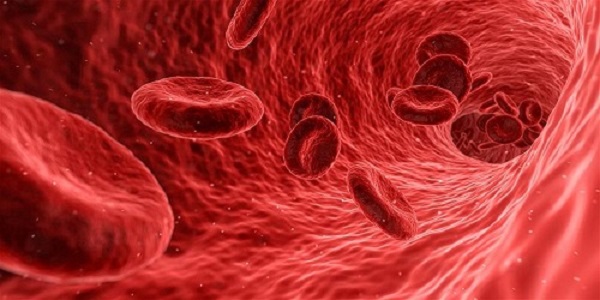
Photo illustration
In cardiovascular medicine, surgery and transplantation are often the optimal treatment options. Currently, transplanted blood vessels can be obtained from the vascular portion of the patient's body, or from a suitable donor. However, this treatment often does not meet the needs of patients, due to many reasons, such as limited autologous vascular resources, high risk of thrombosis, infection from grafted vessels, etc. Therefore, an alternative is an artificial blood vessel, which maintains blood circulation and ensures normal physiological activity. The artificial blood vessels must have good mechanical properties, be suitable for blood pressure, allow endothelial cells to proliferate and most importantly prevent the formation of blood clots during transplantation.
Up to now, in Vietnam, large diameter artificial blood vessels (>6mm) have achieved certain success in the transplant and treatment related to blood vessels. Meanwhile, artificial blood vessels with a small diameter (≤6mm) still have limitations in strength and stiffness, leading to arterial blockage during the time the patient wears the implant.
Polyurethane (PU) and polycaprolactone (PCL) are considered as potential polymers for artificial vascular applications due to their good mechanical properties and high biocompatibility. PU has elasticity, good blood compatibility, can provide a mechanical environment similar to natural vascular tissues, especially to support endothelial cell proliferation. PCL is a hydrophobic polymer with mechanical properties ideally suited for the proliferation of endothelial cells, an important factor in preventing thrombus formation (clotting). In the country, there have been some studies on the use of PU/PCL to fabricate artificial blood vessels, but it is not anti-thrombotic, so it fails when transplanting. In addition, due to the inert and hydrophobic nature of the polymer, blood vessels made of PU/PCL fibers support endothelial cells to adhere and grow with low efficiency. There are also no studies on antithrombotic and surface denaturation that support endothelial cell proliferation of blood vessels made from PU/PCL.
Face with that fact, the authors at Ho Chi Minh City International University have carried out the project "Fabrication and improvement of surface antifreeze properties of poly-urethane/poly-caprolacton (PU/PCL) electrospun nano-films for circuit applications small-diameter artificial blood", in order to fabricate small-diameter blood vessels, improve the vessel wall surface with good mechanical properties, high biocompatibility, support endothelial cell growth and anti-coagulation blood during transplantation.
Accordingly, the authors used the electrospinning method (using electric field forces to pull out very thin fibers from the polymer solution), successfully fabricated PU/PCL artificial blood vessels, with a length of 5cm, diameter 6mm glass with tensile strength > 5Mpa.
During the fabrication process, the team used poloxamer 407 (a surfactant), which promotes cell adhesion and proliferation, and inhibits platelet adhesion for vascular engineering applications. In addition, poloxamer significantly enhances the wetting ability of the surface due to the hydrophilicity of the PEG (Polyethylene glycol) polymer blocks.
Laboratory tests have shown that the small diameter PU/PCL artificial blood vessel produced by the team is anti-thrombotic, can withstand blood pressure after implantation, and limits platelet adhesion. At the same time, preventing transmembrane leakage and permeability, which can be applied in vascular engineering, treatment of cardiovascular disease.
The project has been accepted by Ho Chi Minh City Department of Science and Technology in the past year.
ctngoc