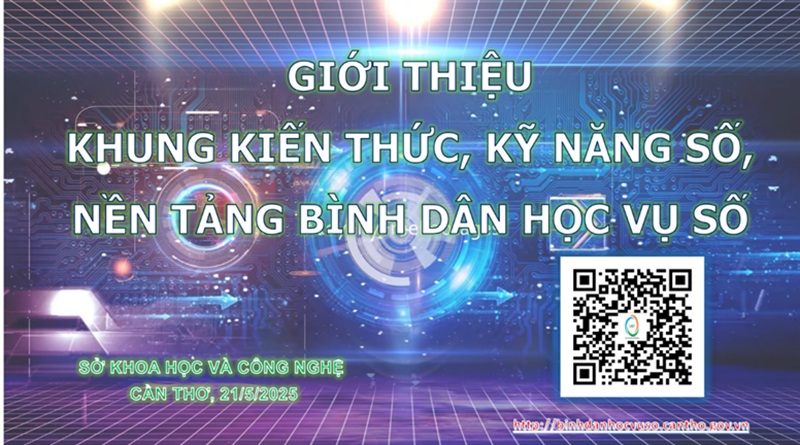
Can Tho introduced the framework of knowledge, skills, and platform for implementing 'Digital literacy'
“Can Tho digital literacy for the masses” – Learn anytime, reach everywhere!
.jpg)
Creating digital content involves not only taking photos and videos but also the ability to edit and combine text and images professionally, citing sources properly
The “Popular literacy” movement launched by President Ho Chi Minh 80 years ago is a symbol of the will and solidarity to help people overcome illiteracy and access knowledge. In the current digital age, that spirit is being inherited and developed through the “Popular digital literacy” movement, aiming to popularize digital knowledge and skills to all classes, ensuring that no one is left behind in the process of national digital transformation.
Can Tho Department of Science and Technology has developed and issued the Framework of knowledge, skills and platform for implementing "Digital literacy for all", initially launched at the conference on May 21, 2025, with the slogan "Learn anytime, reach everywhere", demonstrating efforts to bring digital knowledge to every citizen through free online courses.
.jpg)
Interface of the platform "Digital literacy for the people" in Can Tho City
The movement aims to equip people with six basic digital skills, including: using devices and software, exploiting data, communicating and collaborating in the digital environment, creating digital contents, ensuring information security, and solving problems with digital technology. These are essential skills to help each citizen integrate into the digital society, promote the development of the digital economy, and build a comprehensive and sustainable digital government and digital society.
To ensure effectiveness, participants, such as officials, civil servants, workers, students, and citizens are all assessed for their capacity through a suitable system, from which electronic certificates are issued and updated in the national database.
The “Digital literacy for all” movement demonstrates the high political determination of local authorities in narrowing the digital gap and mobilizing everyone’s participation in the national digital transformation process. The assessment results will clearly reflect the digital capacity of each individual, contributing to promoting the digital economy, building digital government, and a comprehensive digital society. This is not only a step forward in state management but also a journey towards a sustainable society where everyone is able to proactively learn, adapt, and develop in the 4.0 industrial revolution.