Operation of Science, Technology & Innovation Funds: Transparency in Resources, Output-Oriented Governance
Circular No. 17/2026/TT-BKHCN not only establishes a unified legal framework for science, technology, and innovation (STI) development funds, but also defines a modern governance model: transparency, market orientation, and output-driven efficiency. This marks an important step in “unlocking” capital flows for STI, ensuring flexible, effective operations aligned with international standards.
The Ministry of Science and Technology has just issued Circular No. 17/2026/TT-BKHCN, accompanied by a model charter on the organization and operation of STI development funds, applicable nationwide from April 16, 2026.
For the first time, a synchronized legal corridor has been created for the entire fund system, laying the foundation for unified governance while maintaining autonomy and flexibility in practice.
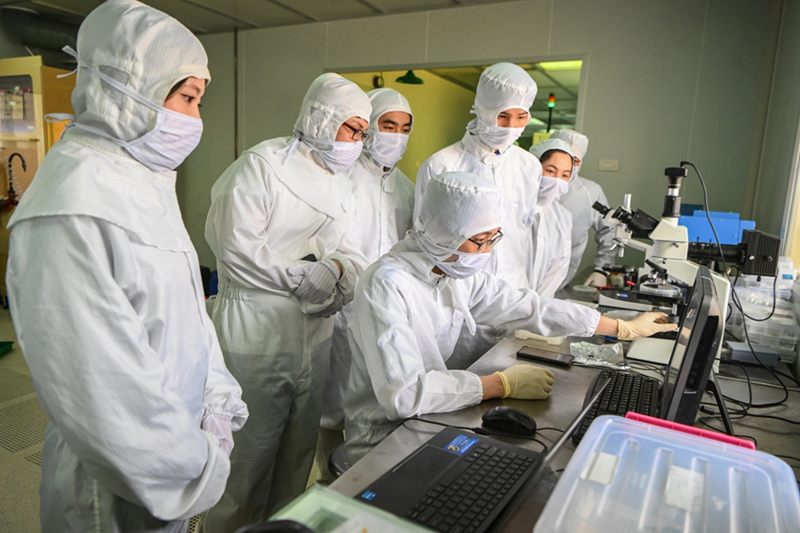
Non-Profit, Market-Based Operation
Under the regulations, ministries, sectors, and localities must base their charters on the model charter, while reviewing and adjusting existing rules within the prescribed timeframe.
The fund is defined as a non-profit state financial organization with legal status, receiving and utilizing resources from the state budget and other lawful sources. Its overarching goal is to make STI the central driver of knowledge-based growth.
A notable addition is the inclusion of “innovation” in its scope, ensuring consistency with the 2025 STI Law, while establishing risk management mechanisms tailored to research. Objective risks arising unexpectedly but within proper procedures may be accepted; phased evaluations serve as the basis for deciding whether to continue, adjust, or terminate tasks, ensuring flexibility and efficiency.
Digital platforms are required throughout management, monitoring, and evaluation, driving comprehensive digital transformation in fund operations. New mechanisms such as state-business co-funding, mobilization of non-budget resources, strengthened accountability, and oversight are designed to foster modern governance.
The fund’s activities are strategically focused: supporting major challenges in industries, sectors, and localities, while enhancing productivity, quality, and competitiveness. Management is output-oriented, closely tied to market demand, contributing to an effective STI ecosystem linking government, academia, and business.
Importantly, the entire process of selecting tasks and implementing entities follows principles of openness, transparency, competition, and non-discrimination. Deep participation of enterprises in advisory and evaluation councils ensures “market signals” become key criteria in resource allocation.
Co-funding mechanisms are clearly defined: the state budget prioritizes basic and applied research, while enterprise contributions increase with technological maturity and commercialization potential. This approach not only mobilizes social resources effectively but also strengthens the link between research, application, and market.
Output-Based Governance, Controlled Risk Acceptance
A fundamental shift introduced by the Circular is moving from “input-based management” to “output-based management.” Funding is allocated according to evaluation milestones tied to progress and results, rather than spread evenly, allowing adjustments, continuation, or termination based on performance.
Digital technologies and artificial intelligence are mandated in planning, monitoring, evaluation, and resource disclosure, aiming for modern, transparent, real-time governance.
Roles are clearly delineated: the Management Council focuses on strategic direction and oversight, while the Executive Agency actively implements funding, commissioning, and support activities, ensuring flexibility and timeliness.
Risk management, monitoring, and accountability mechanisms are comprehensively designed, allowing controlled risk acceptance in scientific research and innovation. Risk assessments are conducted by scientific councils or independent experts, serving as the basis for decisions on continuation, adjustment, or termination.
The Circular also emphasizes strong decentralization and delegation, avoiding rigid models, enabling ministries, sectors, and localities to choose operational approaches suited to their realities.
With Circular No. 17/2026/TT-BKHCN, a new institutional foundation for STI funds has been firmly established: standardized operations, transparent funding, output-based management, and controlled risk acceptance. Beyond improving financial mechanisms for STI, this is a crucial boost to building a substantive innovation ecosystem, tightly linking government, academia, and business, and directly contributing to knowledge-based growth.