From “Brown” to “Green”: A New Path for Industrial Zones
As environmental standards and sustainability increasingly become mandatory “passports” for participation in global supply chains, the shift toward eco-industrial zones has emerged as an urgent requirement.
In Đà Nẵng, the transition began during 2016–2021 with a pilot project at Hòa Khánh Industrial Zone. Early results showed that many businesses significantly improved resource efficiency and reduced production costs by adopting cleaner production methods and optimizing energy use. This laid a crucial foundation for the city to expand the model in the next phase with a clear direction and roadmap.
According to the plan, during 2026–2027, Đà Nẵng aims to scale up the eco-industrial model, targeting around 50% of enterprises in Hòa Khánh Industrial Zone to participate through digitalization of data, improved energy and resource management. Looking further ahead, from 2028–2035, the city will invest comprehensively in technical infrastructure such as water reuse systems, networks for energy and by-product exchange among enterprises, and renewable energy development.
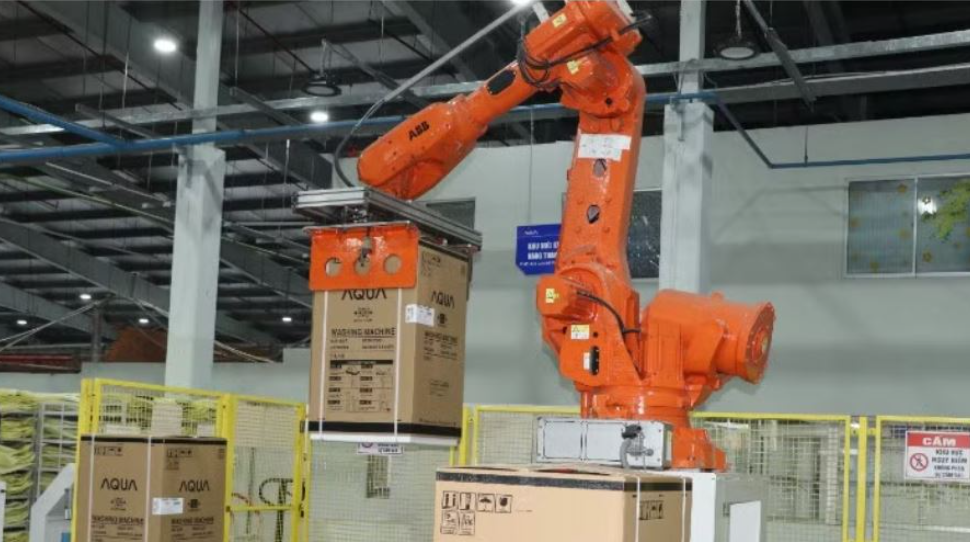
The creation of industrial symbiosis chains is expected to help businesses maximize resources, cut input costs, and minimize environmental waste.
Beyond environmental factors, the transition to eco-industrial zones is also a strategy to enhance competitiveness. Đà Nẵng currently has 36 industrial zones and 126 clusters, covering about 11,000 hectares but only 3,000 hectares are in use. If this potential is steered toward a “green–digital–circular” model, it will create advantages in attracting investment, particularly high-quality capital that increasingly prioritizes sustainability criteria.
Meanwhile, Đồng Nai is implementing its transition with measurable and specific goals. Between 2026–2030, the province aims to have at least two industrial zones certified as eco-industrial, while 90% of zones adopt energy-saving and efficiency solutions. Notably, at least 10% of enterprises must apply cleaner production methods, improve resource efficiency, and reduce emissions.
This vision is elevated further in the long term, as Đồng Nai targets net-zero emissions by 2050 and 100% of industrial zones powered by renewable energy. To achieve this, the province is rolling out comprehensive measures such as green credit mechanisms, renewable energy infrastructure investment, promotion of circular economy practices, and digital technology applications in managing energy, water, and waste. Industrial symbiosis—where businesses share and reuse by-products and energy—is identified as a key factor to boost system-wide efficiency.
In practice, pioneering zones have already reported clear benefits. For example, Long Đức Industrial Zone in Đồng Nai, spanning 282 hectares, has attracted over 70 projects with nearly USD 2 billion in investment and currently meets 15 out of 22 eco-industrial criteria. This success demonstrates that investing in modern infrastructure and selecting high-tech, environmentally friendly projects not only reduces negative impacts but also generates significant added value, contributing to overall productivity growth.
The common thread in Đà Nẵng and Đồng Nai’s approach is the shift from traditional industrial zones to integrated “green–digital–circular” models. This process not only helps businesses save on energy and raw material costs but also optimizes production processes, directly enhancing labor productivity.
At the same time, meeting international environmental standards opens doors to major export markets and attracts high-quality investment flows.
However, the transition also poses significant challenges. Green infrastructure investment, clean technologies, and production model changes require substantial resources, while many small and medium-sized enterprises still face financial and management limitations. Without timely support in policies, credit, and technical expertise, the risk of delayed transition is real—potentially eroding long-term competitiveness.
In this context, developing eco-industrial zones is not just an environmental issue but a matter of productivity and the future of enterprises. Those who move first will gain the advantage, while delays may come at the cost of exclusion from global supply chains. This is a clear warning for a transition that is accelerating and irreversible.