Government Issues Decree to Boost Science, Technology, and Innovation in Higher Education
The Government has promulgated Decree No. 125/2026/NĐ-CP regulating science, technology, and innovation activities in higher education institutions.
The decree outlines the organization, management, and policies to promote scientific research, technological development, and innovation. It covers potential and strong research groups, financial mechanisms, funds and investment, as well as the rights, obligations, and responsibilities of relevant agencies, organizations, and individuals.
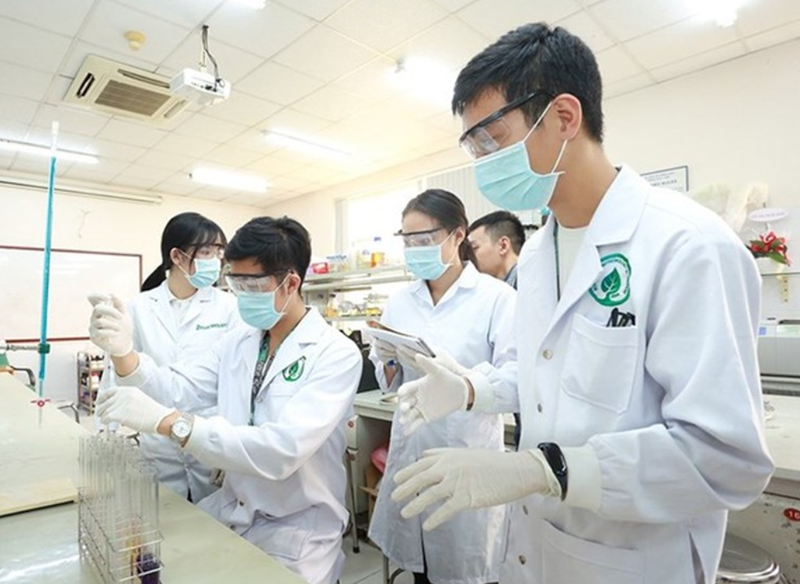
Potential and Strong Research Groups
Universities are tasked with establishing potential and strong research groups based on their needs, resources, and development strategies.
- A potential research group must have at least three members, including a permanent faculty member as the group leader and at least two key members.
- A strong research group must have at least five members, with a permanent faculty member as the leader and at least four key members. The leader must be an outstanding scientist with high academic standing and international recognition, capable of guiding and building long-term research directions that generate impactful scientific and technological products.
Both types of groups must aim to produce research with academic value or commercialization potential, foster collaboration among universities, research institutions, and businesses, and contribute to the development of high-quality human resources.
The Ministry of Education and Training will set conditions, criteria, and procedures for recognition, renewal, or non-recognition of these groups and their leaders. Quantitative benchmarks will include scientific publications, intellectual property rights, and other research outputs, tailored to specific fields. Universities will implement recognition processes through their scientific councils, ensuring autonomy and accountability.
Incentives for Research Groups
The decree introduces preferential policies to encourage the growth of research groups:
- Potential research groups will be prioritized for research assignments, international cooperation, and partnerships with enterprises. Leaders may receive up to a 50% reduction in annual teaching hours, while key members may receive up to a 20% reduction. Universities will also provide workspace, research facilities, and seed funding.
- Strong research groups will enjoy extensive state support, including:
- Priority in national-level research tasks, especially in strategic and high-tech fields.
- Access to major national laboratories.
- Opportunities for postdoctoral programs and international research collaborations.
- Participation in national technology transfer and consulting projects.
- Overseas internships and research placements under approved programs.
Additionally, the government will select certain strong research groups for long-term strategic support in priority or emerging fields.
At the university level, strong research groups will receive regular funding, dedicated facilities, and assistance in mobilizing external investment. Leaders may have up to 80% of their teaching workload reduced, while key faculty members may see reductions of up to 50%, with these adjustments counted toward academic title evaluations.
Annual Review
All preferential policies will be reviewed and adjusted annually based on the groups’ performance, research outcomes, and fulfillment of approved objectives.