Electric vehicles are increasing rapidly, putting pressure on the electricity grid as seen from charging stations
The rapid increase in electric vehicles is placing new demands on the national power grid. However, at a press conference, the Ministry of Industry and Trade stated that the total electricity consumption from electric vehicles remains low, and the concern lies not in total output but in local power capacity pressure and grid infrastructure.
On the afternoon of April 9, 2026, at the Ministry of Industry and Trade's regular quarterly press conference for the first quarter of 2026, the issue of electricity demand for transportation vehicles attracted considerable attention from the media, given the rapid development of electric vehicles in Vietnam.
Total consumption isn't large yet, but the pressure doesn't lie in the numbers.
With the rapid increase in the number of electric vehicles, the demand for battery charging is beginning to form a new type of load in the power system. Unlike traditional electricity demands, the load from electric vehicles tends to be concentrated in specific times and locations, especially in urban areas where the density of vehicles and charging stations is increasingly high.
This characteristic means that the issue of electricity for electric vehicles goes beyond just total consumption; it shifts to the problem of power allocation and the grid's capacity to meet demand in each specific area.
According to information released by the Ministry of Industry and Trade, by the end of 2025, Vietnam will have approximately 215,000 electric cars and nearly 2.6 million electric motorcycles. With this scale, the total electricity consumption for battery charging is estimated at around 652 million kWh, equivalent to about 0.2 - 0.3% of the total national commercial electricity demand.

Deputy Director of the Electricity Department (Ministry of Industry and Trade) Nguyen The Huu speaks at the press conference.
Overall, this level of consumption is not yet likely to put significant pressure on the national power grid. However, at the press conference, Deputy Director of the Electricity Department (Ministry of Industry and Trade) Nguyen The Huu noted that looking solely at electricity consumption figures does not fully reflect the nature of the problem.
"This figure isn't huge, but the electricity demand for transportation isn't just about total consumption; we need to consider the instantaneous capacity the system must meet. The issue isn't a power shortage across the entire system, but rather the capacity of the power grid in each specific area, especially the medium and low voltage grids ," Deputy Director of the Electricity Department Nguyen The Huu stated.
Accordingly, the key point lies in the power consumption characteristics of electric vehicles. Battery charging typically takes place over short periods, with high power consumption, and tends to be concentrated during certain hours. This creates a new type of load, different from traditional loads which have relatively stable or predictable consumption patterns.
In practice, charging demand can be concentrated at certain times, increasing local load in areas with a high concentration of vehicles and charging stations. When many vehicles are charging simultaneously, especially in densely populated urban areas or locations with a high density of charging stations, power demand can surge.
This is the factor that creates the risk of localized overload, even when the overall power supply of the system remains stable. The pressure doesn't lie in the amount of electricity consumed throughout the day or year, but in the ability to supply electricity in short periods at high power levels.
From a technical perspective, this places higher demands on the power distribution grid system, especially the medium and low voltage grids – which directly supply power to charging stations and consumers. Without timely upgrades, the system may struggle to meet the sudden surge in load.
According to the Ministry of Industry and Trade's assessment, at its current scale, electric vehicles do not yet pose significant pressure on the national power grid overall, but the local power capacity factor needs to be closely monitored during development.
Load regulation and power infrastructure planning have become key factors.
Based on the above reality, the Ministry of Industry and Trade believes that the issue of electricity for electric vehicles is not simply about increasing supply, but about reorganizing electricity usage in a more rational and efficient way.
One of the solutions emphasized is load regulation through changes in electricity usage behavior. Accordingly, encouraging people to charge electric vehicles outside of peak hours is considered an important solution to reduce pressure on the power system. Deputy Director of the Electricity Department Nguyen The Huu believes that a mechanism is needed to encourage people to charge electric vehicles outside of peak hours to reduce pressure on the power system.
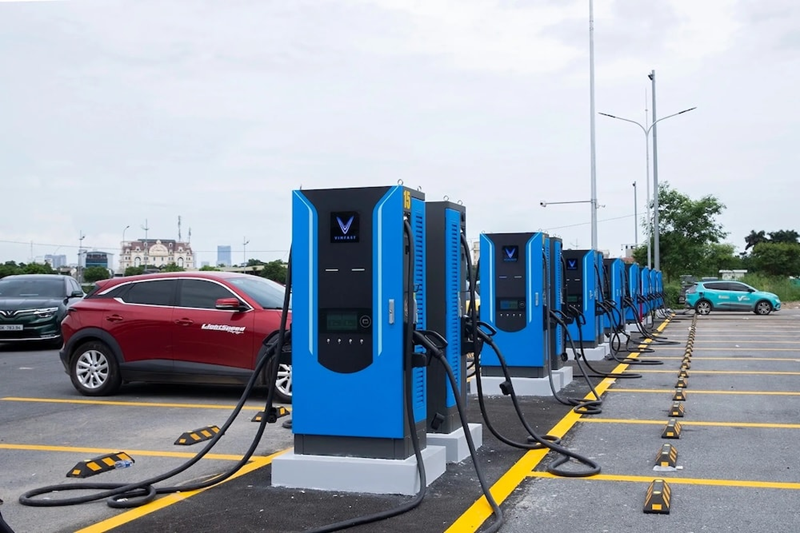
Encouraging people to charge their electric vehicles outside of peak hours is seen as an important solution to reduce pressure on the power grid. (Illustrative image.)
This solution not only helps to distribute the load over time but also contributes to improving the efficiency of electricity use, especially during off-peak hours when power generation capacity is not fully utilized. Besides the time factor, the spatial distribution of the load also needs to be considered. The development of charging stations should be linked to grid planning, avoiding excessive concentration in one area when the infrastructure is not yet adequate.
With the rapid increase in electric vehicles, investing in upgrading the power distribution grid, especially the medium and low voltage grids, has become an urgent requirement. This is the area directly impacted by electric vehicle charging loads and is also the point most susceptible to overload if not properly prepared.
Furthermore, the application of technology in load management, such as developing smart charging stations capable of adjusting power output according to grid conditions, is also considered a necessary direction for the future.
According to the Ministry of Industry and Trade's assessment, in the short term, electric vehicles do not pose significant pressure on the overall power system. However, in the medium and long term, as the number of vehicles continues to increase rapidly, the need for load regulation, infrastructure planning, and grid upgrades will become more urgent.
Clearly, the issue of electricity supply for electric vehicles doesn't lie in a power shortage, but rather in how the power system adapts to a new type of load. As electric vehicles become a trend, synchronized preparation in infrastructure, operating mechanisms, and electricity usage behavior will be crucial to ensuring the safe, stable, and sustainable operation of the national power system.
Bich Viet