Quang Ngai brings online public services to villages, promoting digital government from the grassroots level.
Beyond mere propaganda, Quang Ngai is implementing models of "bringing services closer to the people," establishing online application reception points right in villages and hamlets. This approach helps people access public services more conveniently, while simultaneously spreading digital skills, gradually narrowing the digital divide, and realizing the goal of building a digital government from the grassroots level.
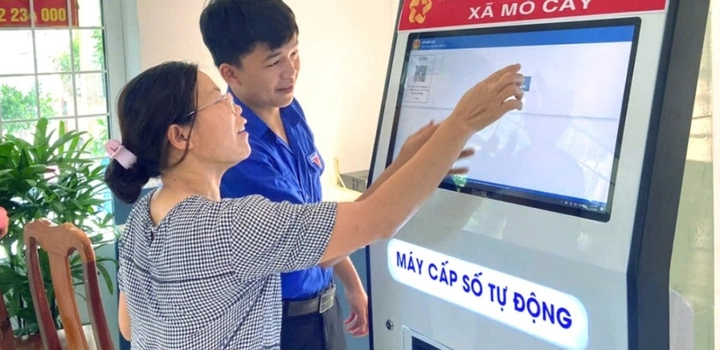
According to Plan No. 87/KH-UBND, the People's Committee of Quang Ngai province has identified the dissemination of information on administrative reform as a key task aimed at raising awareness among officials and civil servants and creating consensus among the people, towards a democratic, professional, modern, and service-oriented administration.
The communication content covers key areas such as institutional reform, administrative procedures, organizational structure, and civil service regulations. Notably, the province particularly emphasizes communication about e-government, digital government, and the provision and use of online public services at Public Administrative Service Centers.
A new initiative is the intensified promotion of a model for handling applications regardless of administrative boundaries, helping citizens and businesses access public services more conveniently, reducing costs and travel time. Along with this, the province is diversifying its communication channels from newspapers and television to social media and the grassroots information system; organizing competitions, seminars, and workshops to make the content of administrative reform more accessible and understandable.
Alongside public awareness campaigns, Quang Ngai province has effectively implemented practical models at the grassroots level. A prime example is the "public service reception point in the village" model in Ba Vi commune, Ba To district. Instead of having to travel 20-30km to the commune center, residents of villages such as Kren, Ba Lang, and Nuoc Lay can submit applications online right in their residential areas with the support of village officials and community digital technology teams.
After just over a month of implementation, the model has shown clear effectiveness: People are guided through online procedures quickly, saving time and costs; procedures such as marriage registration, birth registration, social welfare... can all be carried out right in the village. After receiving the documents, they are processed on the system and results are returned promptly, ensuring a smooth and uninterrupted process.
To operate the model, the local authorities organized digital skills training for village heads, invested in equipment and internet access, and assigned personnel to provide regular support to residents. In particular, the reception points also incorporated guidance on using smartphones, submitting online applications, and making electronic payments – fundamental skills for digital citizenship.
From this practical experience, it can be seen that "digital literacy for the people" is not just limited to propaganda but is being concretized through action: bringing digital knowledge to every village and every citizen, especially in remote areas. Hands-on guidance and direct instruction at the grassroots level help people gradually form the habit of using digital services, thereby narrowing the digital divide and enhancing their ability to access digital government.
Quang Ngai aims to significantly improve key indicators such as the PAR Index, SIPAS, PAPI, and PCI through a comprehensive set of solutions. Simultaneously, tightening administrative discipline and order, along with enhancing public service ethics, will be integrated to fundamentally change the spirit and attitude of service among its officials.
It is evident that, from policy to action, from communication to practical implementation, Quang Ngai is gradually realizing the goal of building a digital government, where citizens are not only the recipients of services but also the active participants, beneficiaries, and masters of public services in the digital environment.
Center for Science and Technology Communication