Vietnam and Australia promote cooperation in digital technology and innovation
The meeting between the Permanent Deputy Minister of Science and Technology Vu Hai Quan and the Australian Ambassador to Vietnam focused on discussing future cooperation directions between the two countries in the fields of science, technology, innovation, and digital transformation.
On the afternoon of March 9th, at the headquarters of the Ministry of Science and Technology (MST), the Permanent Deputy Minister of Science and Technology, Vu Hai Quan, held a meeting and working session with the Australian Ambassador to Vietnam, Gillian Bird, and a delegation from the Australian Embassy.
One of the topics discussed at the meeting was promoting the signing of a Memorandum of Understanding on cooperation in digital economic development between Vietnam and Australia.
Accordingly, the draft document submitted by Australia is currently being reviewed and commented on by relevant Vietnamese agencies before proceeding with further negotiations. This document is expected to create a framework for cooperation in areas such as digital economic development, digital transformation, and the promotion of new technologies.
Artificial intelligence (AI) was also a topic that both sides spent considerable time discussing. Against the backdrop of Australia developing a whole-government strategy on international cooperation and regional leadership in the field of AI, Vietnam proposed strengthening joint research programs between research institutes, universities, and technology companies of the two countries.
Suggested areas for collaboration include developing AI applications in healthcare, education, smart agriculture, resource management, and climate change response.
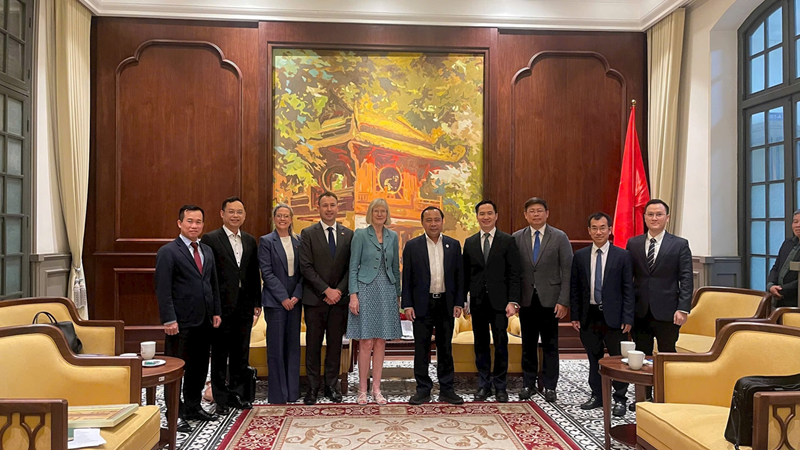
The meeting focused on discussing future cooperation directions between the two countries in the fields of science, technology, innovation, and digital transformation.
From the perspective of developing a technology ecosystem, Vietnam also proposed building guidelines for developing a reliable AI ecosystem, ensuring a balance between technological innovation, data sovereignty, and ethical principles in AI applications.
This is coupled with collaborative programs to train AI human resources, through expert exchanges, postgraduate training programs, and capacity-building activities for research and technology management teams.
Regarding cooperation in innovation, both sides paid particular attention to the Aus4Innovation Program. During the meeting, the Australian side proposed that the Ministry of Science and Technology send a representative to participate in the program's Steering Committee to coordinate cooperation activities in the next phase.
Along with project funding activities, the Program is also aiming to develop tools for measuring the impact of policies on the innovation ecosystem, contributing to improved management efficiency and promoting linkages between research institutions and businesses.
The Vietnamese side also emphasized the role of the Vietnam-Australia Strategic Technology Centre (AVST), scheduled to be inaugurated in June 2025, in promoting cooperation in research on emerging technologies.
Leaders of the Ministry of Science and Technology expressed their desire for both sides to soon implement specific research programs through this center, focusing on strategic technology areas such as next-generation telecommunications, especially 5G and 6G.
In the field of digital infrastructure, Australia also mentioned the possibility of supporting Vietnam in implementing the Strategy for the Development of Submarine Fiber Optic Cable Systems until 2030.
Support may include sharing experience in contractor selection, sharing data for cable routing, and technical solutions to mitigate risks that could affect the operation of submarine cable systems.
In addition, Australia also hopes to receive support from the Ministry of Science and Technology in implementing the Innovation and Technology Cooperation Initiative between Australia and Vietnam, aiming to support Vietnamese researchers in carrying out projects related to technology, sustainable marine economy, and waste management and reuse.
Speaking at the meeting, Permanent Deputy Minister of Science and Technology Vu Hai Quan highly appreciated Australia's cooperation and support in the past, and affirmed that the Ministry of Science and Technology is ready to closely coordinate with Australian partners to promote cooperation programs in depth, contributing to strengthening the connection of the science, technology and innovation ecosystem between the two countries.
Bich Viet