Da Nang: Accelerating efforts to eliminate telecommunication signal blind spots before June 30th.
Da Nang is accelerating the synchronized implementation of solutions to eliminate "white spots" and "dead zones" in telecommunication coverage, especially in mountainous and disadvantaged areas; striving to complete this before June 30, 2026, contributing to narrowing the digital divide and improving the quality of life for its people.
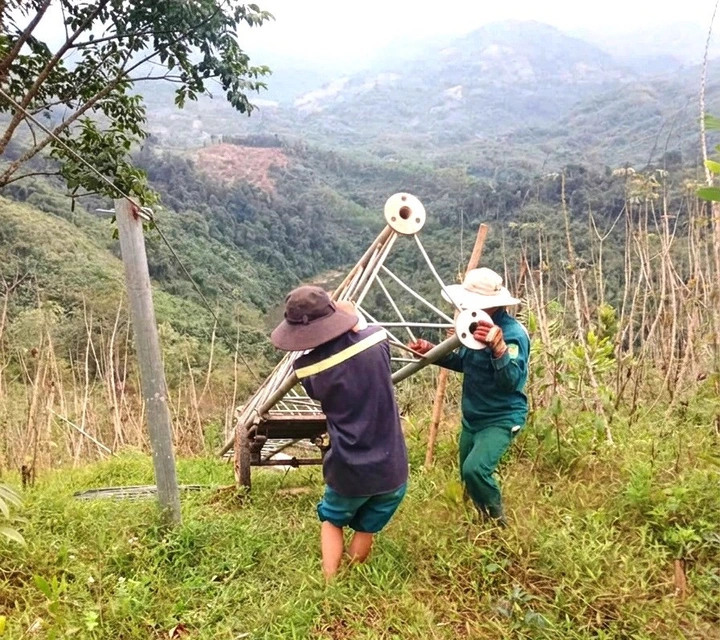
To eliminate "white spots" and "dead zones" in mobile phone coverage in the area, relevant agencies, local authorities, and telecommunications companies are simultaneously implementing various solutions, accelerating infrastructure investment, expanding coverage, and aiming for comprehensive connectivity.
Many residential areas in Da Nang still have no signal.
In mountainous communes, mobile phone signals are mostly stable only in the central areas of the villages; the further away from the center, the weaker the signal becomes, or even completely lost. The rugged, hilly terrain continues to be a major obstacle to signal transmission, leaving many residential areas with "signal gaps," directly affecting the lives and daily activities of the people.
In Tra Lien commune, Mr. Duong Minh Anh, Vice Chairman of the People's Committee, said that all eight villages have mobile phone coverage, with Viettel network being dominant. However, stable signal is concentrated only around the village center; outside a radius of about 2km, the signal starts to become intermittent. In residential areas such as Lang Gach, Tak Ngui, and Thanh Truoc, communication often depends on "luck".
A similar situation exists in Tra Tap commune, where the high, mountainous terrain makes it difficult for mobile phone signals to reach many residential areas. Currently, there are still 7 residential areas with poor signal coverage. Notably, 14 residential areas still lack access to the national power grid, hindering investment in telecommunications infrastructure. During the rainy season, disrupted transportation further exacerbates communication disruptions.
In Tay Giang commune, despite the investment in a base station, signal quality remains unstable. Besides Z'lao village, which is a clear "dead zone," there are five other residential areas that frequently experience signal loss and interference. In locations far from the center, making phone calls or accessing the internet still faces many obstacles.
According to the Da Nang Department of Science and Technology, by the end of 2025, the entire city will still have 34 villages and residential clusters with poor mobile phone coverage, mainly concentrated in high mountainous areas. To date, 13 villages and residential clusters have been covered by mobile phone networks; village headquarters and community centers generally have stable signals, and some areas have two or more network providers, even deploying 5G. However, along the roads leading to villages and residential areas far from the city center, the signal remains weak and unstable.
For 10 villages and 11 residential clusters with poor signal coverage in highland communes such as Avuong, Hung Son, Tra Leng, Tra Tap, etc., the Department has developed a plan for passive telecommunications infrastructure development in 2026, aiming to eliminate signal gaps before June 30, 2026.
However, implementation progress has been slow due to the vast area, rugged terrain, many areas lacking electricity, and sparse population. Surveying is difficult due to a lack of specific coordinate information and inaccessible roads. In addition, some planned locations for the stations are affected by protected forest planning, making construction impossible.
Accelerate investment, diversify solutions.
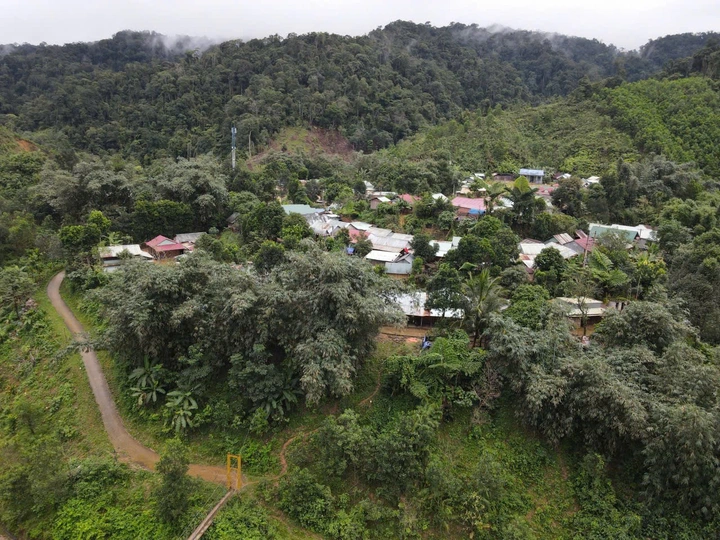
In order to achieve the set targets, telecommunications companies are accelerating infrastructure deployment and flexibly choosing solutions suitable for each locality.
A representative from Viettel Da Nang stated that among the 10 villages still lacking coverage, some areas face significant obstacles. Specifically, villages A Tu 1 (Hung Son commune) and village 3 (Phuoc Thanh commune) cannot be served because they are located within protected forest areas. Aur village (Avuong commune), situated in the middle of a primary forest, lacks access to the power grid, requiring the company to coordinate with relevant authorities to find a feasible solution.
In the remaining areas, infrastructure is being urgently invested in; in particular, three villages have completed the installation of base stations and are expanding coverage. The goal is to eliminate signal gaps in seven villages before June 30th.
For the 11 residential areas still lacking coverage, deployment is being accelerated in areas where electricity is available and suitable locations for base stations have been identified. Notably, the Starlink satellite internet transmission solution will be applied in particularly difficult areas to improve coverage efficiency. For areas without electricity, options using generators or solar power are also being considered.
According to the Da Nang Department of Science and Technology, along with eliminating signal blind spots, the city will continue to modernize its telecommunications infrastructure, striving to have over 90% of its existing 4G base stations reach 5G coverage by 2026.
In addition, the city is researching mechanisms to support approximately 500 subscribers using satellite internet services in remote, border, and island areas, as well as places with limited access to traditional telecommunications infrastructure.
Vice Chairman of the Ho Chi Minh City People's Committee, Ho Quang Buu, emphasized that eliminating "white spots" and "dead zones" in signal coverage is not only a task for infrastructure development, but also an important solution to narrow the digital divide, serve administrative reform, promote digital transformation, and improve the quality of life for people, especially in mountainous and disadvantaged areas.
The city requires telecommunications businesses to strengthen coordination, share infrastructure data, and accelerate the investment in base stations; at the same time, localities should proactively allocate land and prioritize the installation of stations at village cultural centers, ensuring efficiency and aesthetics.
Simultaneously, the industry and trade sector and the power company were tasked with urgently implementing projects to supply electricity to areas without electricity, submitting them to competent authorities in April and striving to complete them before June 30th, with the goal of ensuring that no resident in the area is left without electricity.
Expanding mobile coverage and eliminating "dead zones" not only facilitates communication and information access for citizens but also creates a crucial foundation for the development of digital government, digital economy, and digital society in the coming period.
Center for Science and Technology Communication