By the end of 2026, 100% of staff will be proficient in using digital platforms to support their work
This is one of the tasks outlined in Directive No. 14/CT-TTg dated April 22, 2026, of the Prime Minister on promoting the training and assessment of digital knowledge and skills for officials, civil servants, and public employees, which was recently signed by Deputy Prime Minister Pham Thi Thanh Tra.
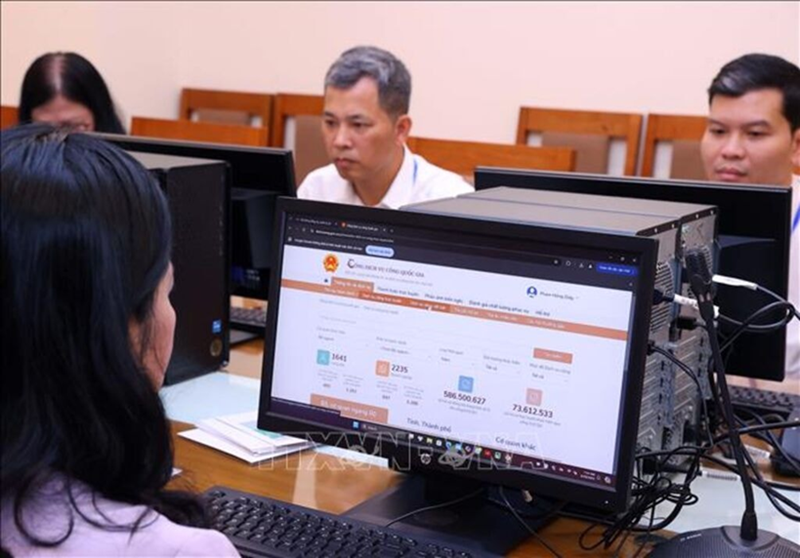
The directive states that, in recent times, the training of digital knowledge and skills for officials, civil servants, and public employees has achieved many positive results: the basic framework of digital knowledge and skills and guidelines for evaluating and certifying the completion of digital skills literacy have been issued; several online learning platforms have been developed; and the training of digital knowledge and skills has been fundamentally linked to the requirements of performing tasks, contributing to improving understanding, enhancing the application of digital knowledge and skills for officials, civil servants, and public employees, and building a digital economy, digital society, and digital government.
However, there is still a situation where civil servants and public employees are not proactive in learning and improving their digital knowledge and skills to serve their work; civil servants and public employees are not making good use of digital tools, platforms, and services in the process of performing their duties and public service, leading to low work productivity and failure to meet the requirements of the new era.
By the end of 2026, 100% of staff will be proficient in using digital platforms and services to support their work.
To rectify and overcome the aforementioned situation and promote the training of digital knowledge and skills for civil servants and public employees; to build a regular habit of self-study and training in digital knowledge and skills for civil servants and public employees, contributing to a step-by-step improvement in the labor productivity of civil servants and public employees, promoting administrative reform, and providing online public services, the Prime Minister requests that the training of digital knowledge and skills for civil servants and public employees be ensured to guarantee that by the end of 2026, 100% of civil servants and public employees have an understanding of digital transformation, digital knowledge and skills, and can effectively use digital platforms and services to serve their work.
The goal is to ensure that from 2027 onwards, 100% of civil servants and public employees complete training in digital knowledge and skills according to updated programs and learning materials, effectively utilize digital platforms, tools, and services, and meet the requirements of their job positions.
Utilizing the "Digital Popular Education" platform.
The directive requires ministries, ministerial-level agencies, and People's Committees of provinces and centrally-administered cities to intensify propaganda and raise awareness among agencies, units, and civil servants about the necessity of learning, improving, and evaluating digital knowledge and skills.
Officials and public employees holding leadership and management positions must set a good example and be serious about studying and improving their digital skills, considering this a regular and important task.
Regarding the use of the "Digital Popular Education" platform, the Directive specifies the following:
2026: Utilize the learning materials issued under Decision No. 522/QD-BGDĐT dated March 10, 2026, by the Minister of Education and Training to organize proactive, self-directed learning and training in digital knowledge and skills for civil servants and public employees; evaluate and certify that civil servants and public employees have completed the learning.
By 2027: Develop, issue, and publish digital knowledge and skills training programs and learning materials to enable civil servants and public employees to proactively learn and improve themselves to meet job requirements; evaluate and certify that civil servants and public employees have completed the digital knowledge and skills training programs and learning materials as prescribed.
In subsequent years, the program and learning materials will be updated and uploaded to enable civil servants to proactively and independently learn; and the completion of the program and learning materials, including digital knowledge and skills, will be evaluated and confirmed according to regulations.
In addition, applying Decision No. 757/QD-BKHCN dated April 29, 2025, of the Minister of Science and Technology (MST) promulgating the Framework of Basic Digital Knowledge and Skills and Guidelines for Assessing and Confirming Completion of Digital Skills Universalization, to survey, evaluate, and confirm the completion of learning programs and learning materials on digital knowledge and skills for civil servants and public employees under its management authority.
The Ministry of Science and Technology is developing a virtual assistant to support the learning of digital knowledge and skills for officials and civil servants.
The directive requires the Ministry of Education and Training, in coordination with the Ministry of Public Security, to upload the set of educational materials issued under Decision No. 522/QD-BGDĐT dated March 10, 2026, by the Minister of Education and Training to the "Popular Education Digital" platform, to be completed before April 30, 2026.
The Ministry of Science and Technology is developing a virtual assistant to support the learning of digital knowledge and skills for civil servants and public employees based on natural language processing technology. The system uses artificial intelligence (AI) to personalize learning content, ensuring an experience tailored to each user's level and needs, and is scheduled for completion in 2026.
The Ministry of Public Security operates and maintains the "Digital People's Education" platform, integrated with VneID, and provides guidance to ministries, ministerial-level agencies, and People's Committees of provinces and centrally-administered cities on using the "Digital People's Education" platform to carry out the assigned tasks specified in point b, clause 2 of this Directive, to be completed before May 31, 2026.