JICA supports high-tech rice production in the Mekong Delta
On March 3, 2026, Loc Troi Group, New Green Joint Stock Company, and the National Agricultural Extension Center held a signing ceremony for a Memorandum of Understanding to cooperate in researching, testing, and applying advanced Japanese technology solutions in high-quality, low-emission rice cultivation in the Mekong Delta region.
The Japan International Cooperation Agency (JICA) is implementing a program to support small and medium-sized enterprises (SMEs) towards the Sustainable Development Goals (SDGs), aiming to contribute to addressing socio-economic challenges in developing countries.
Within the framework of this program, JICA approved the proposal of New Green Co., Ltd. (headquartered in Koganei City, Tokyo) on "Survey for developing a solution to support high-quality, low-emission rice cultivation using Aigamo Robot technology (weed-killing robot)".
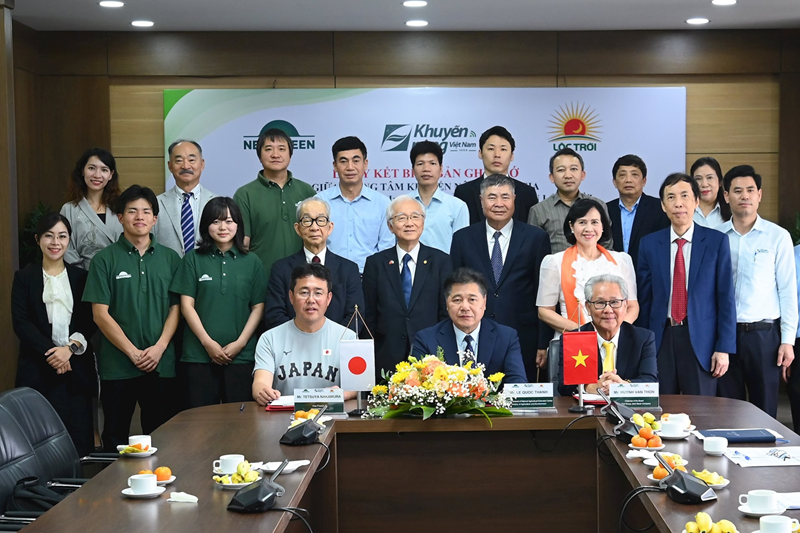
Loc Troi Group, New Green Joint Stock Company, and the National Agricultural Extension Center signed a Memorandum of Cooperation. (Photo: HL).
Vietnam is vigorously implementing its action plan to reduce methane emissions. In particular, the project to develop 1 million hectares of high-quality, low-emission rice in the Mekong Delta by 2030, approved by the Government in November 2023, demonstrates a strong commitment to transforming the agricultural model towards sustainability.
The Aigamo robot was developed to control weeds without the use of pesticides, reducing input costs and minimizing environmental impact. The device is powered by a motor using solar panels and a battery, combined with special stirring blades to mix water and mud, preventing light from reaching the weeds.
The robot is equipped with GPS and AI, allowing it to operate automatically within a designated field area while simultaneously recording operational data. The mud stirring process also promotes the growth of aerobic bacteria, contributing to a reduction in methane emissions from rice paddies – one of the significant sources of agricultural emissions.
JICA expects this survey to help bring Japanese technology into practice, supporting Vietnam in improving productivity, applying smart agricultural solutions, and promoting low-emission farming.
With the signed memorandum of understanding, the three parties will continue to collaborate on joint research, model testing, and refinement of low-emission rice cultivation processes based on robotic duck farming systems and advanced agricultural technologies from Japan.
The parties also aim to produce, assemble, and disseminate this technology in Vietnam, contributing to the expansion of high-quality, sustainable rice cultivation areas.
Hoang Linh - Ninh Dien