PTIT aims to become a leading institution in training and strategic technology research.
On March 31, 2026, the Ministry of Science and Technology officially approved the Project "Continuing to develop the Posts and Telecommunications Institute of Technology as an organization specializing in training, in-depth research in science and technology, innovation and digital transformation in the period 2026-2035". This is a crucial turning point, positioning the Institute as a leading institution in the country's strategic technology fields.
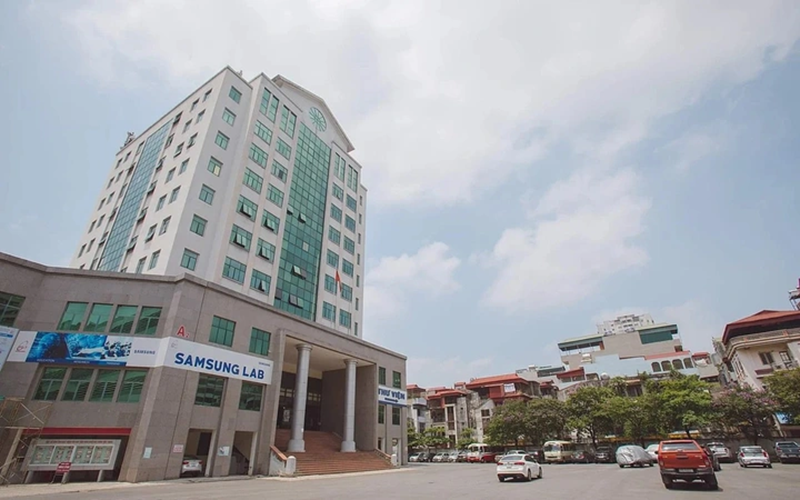
According to Decision No. 1985/QD-BKHCN, the Posts and Telecommunications Institute of Technology (PTIT) is oriented towards developing into a leading national organization for in-depth training and research, approaching world-class standards. The overarching principle of the plan is to strictly implement the "three-party" model, creating a unified link between research, training, and technology transfer.
In particular, the Academy will serve as a "sandbox" for new models, directly transforming national development directions into academic disciplines and practical models, creating a rapid feedback loop for policy.
Breakthrough goals by 2035
The project sets specific goals to make the Academy a leading institution in the national science and technology ecosystem:
Leading in Artificial Intelligence (AI): Building a national-scale shared AI computing infrastructure center. By 2030, forming an AI server cluster with thousands of GPUs. The Academy is also the core of developing the Vietnamese Big Language Model in education and culture.
Pioneering new technologies: Opening new programs and training talent in "hot" fields such as semiconductors, UAVs, autonomous robots, aerospace, low-level economy, and digital assets.
Innovation Ecosystem: Developing a national innovation center, aiming to incubate at least 30 startups by 2027 and striving to create "unicorn" businesses by 2035.
The Digital University Model: To become a leading institution in digital platforms for the higher education system. The goal is that by 2030, 100% of the Academy's administrative and training activities will be supported by digital platforms.
Emphasis on commercialization and intellectual property.
Beyond just research, the Project emphasizes increasing the capacity for commercializing intellectual property, considering this as one of the important pillars to enhance the practical value of science and technology activities at PTIT.
The Academy aims to achieve 100-120 intellectual property applications annually by 2035, focusing not only on quantity but also on improving the quality and applicability of inventions and useful solutions. Simultaneously, promoting the formation of 30-50 science and technology enterprises and spin-offs will create concrete "outputs" for research activities, contributing to bringing technology from the laboratory to the market.
To realize this goal, PTIT will strengthen cooperation with businesses, investment funds, and startup support organizations; and develop mechanisms to encourage lecturers, scientists, and students to participate in intellectual property registration and innovative startups.
Setting a target of achieving at least 20% of revenue from technology commercialization by 2030 not only contributes to diversifying financial resources but also marks a significant shift from the traditional university model to an innovative university model, where knowledge is transformed into economic value and directly contributes to the development of businesses and society.
Global Education Mission
Besides serving the socio-economic development of the country, PTIT aims to expand its educational reach globally through the development of a multilingual Mobile Open University (MOOC) model.
This system not only offers flexible online courses but is also designed to personalize learning paths, integrating advanced digital technologies such as artificial intelligence, learning data analytics, and smart learning platforms. Through this, learners can access knowledge anytime, anywhere, catering to diverse audiences and needs.
In particular, the model aims to serve specific learner groups such as the Vietnamese community abroad, workers in industrial zones, military personnel, and those who do not have the opportunity to attend traditional training programs. This is considered an important solution to expand access to high-quality education, contributing to promoting lifelong learning and enhancing the skills of the workforce in the digital age.
In parallel, the Academy will develop short-term training programs, digital certifications, and intensive courses linked to the practical needs of the global labor market, especially in the fields of new technologies and the digital economy.
With the goal of serving 1 million learners by 2030, the open digital university model not only contributes to improving the quality of human resources in the country, but also helps spread Vietnamese knowledge to the world, gradually affirming the Academy's position in the global digital education ecosystem.
Contributing to the formation of national knowledge centers.
In the context of Vietnam's accelerated development of science and technology and digital transformation, building specialized higher education institutions is considered a crucial solution for forming internationally competitive knowledge centers.
The fact that PTIT's project has been approved by the Ministry of Science and Technology for continued development is significant not only for the Academy itself, but also contributes to promoting Vietnam's innovation ecosystem and digital economy in the coming period.
With its new direction, PTIT is expected to become one of the leading centers in training, research, and innovation, contributing to the creation of resources and technology for the sustainable development of Vietnam's digital economy.
Center for Science and Technology Communication