ISO 10218:2025 – Redefining Industrial Robot Safety in Smart Manufacturing
The newly released ISO 10218:2025 standard not only updates technical requirements but also expands its scope to functional safety, cybersecurity, and human–robot interaction. This marks a pivotal shift in how the world manages risks in automated production.
The previous version, ISO 10218:2011, served as the foundation for industrial robot safety, with two main parts covering requirements for the robots themselves and for integrated systems. However, rapid advances in technology—particularly collaborative robots, artificial intelligence, and connected systems—have exposed the limitations of the old framework. Today’s robots are no longer standalone machines; they are integral components of a digitized manufacturing ecosystem, where risks stem not only from mechanics but also from software and data.
ISO 10218:2025 has been redesigned with a multi-layered approach, combining mechanical safety, functional safety, and digital safeguards. This means safety is no longer confined to preventing physical accidents but extends to managing the entire operational lifecycle of robots in smart manufacturing environments.
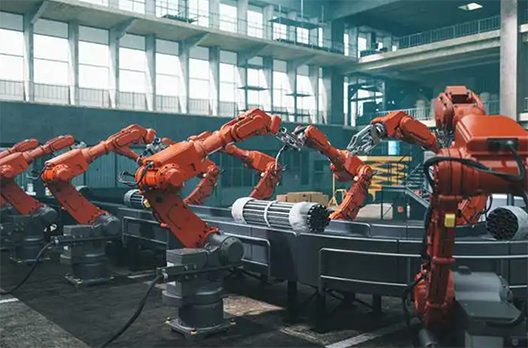
One of the most significant changes in the 2025 edition is the incorporation of ISO/TS 15066 into the core structure of the standard. Previously, collaborative robots (cobots) were addressed only in supplementary guidelines, but they are now a central element. This reflects the reality that humans and robots increasingly work side by side in shared production spaces. As a result, the standard introduces more specific requirements for force limits, pressure thresholds, and safe distances to minimize risks of injury to workers.
For the first time, cybersecurity has also been formally integrated into industrial robot safety standards. With robots connected to IoT systems and smart manufacturing platforms, threats such as unauthorized access or malicious control have become real concerns. The inclusion of requirements for access control, authentication, and data protection signals a shift from “protecting humans from machines” to “protecting entire production systems from digital risks.”
Alongside technical updates, the standard has been conceptually restructured with clearer definitions of robots, robotic systems, and applications. This reduces ambiguity in design, integration, and risk assessment—an essential improvement in today’s complex global supply chains, where a robotic system may be designed, manufactured, and operated across multiple countries.
The release of ISO 10218:2025 underscores a clear trend: robots are no longer isolated tools but inseparable parts of modern manufacturing ecosystems. By integrating mechanical safety, functional safety, and cybersecurity into a single framework, the standard lays the foundation for a new generation of factories—where humans and robots can operate together in safe, flexible, and highly connected environments.