CAN THO CITY DEPARTMENT OF SCIENCE AND TECHNOLOGY
Vietnam Issues National Standard TCVN 14474:2025 on Battery Assessment for Repurposing and Remanufacturing
Vietnam has officially introduced the national standard TCVN 14474:2025, establishing a comprehensive framework for evaluating used batteries before they are repurposed or remanufactured. The move aims to mitigate fire and explosion risks, enhance safety, and promote the circular economy.

The rapid growth of electric vehicles, mobile devices, and energy storage systems in recent years has led to a surge in discarded batteries. Beyond conventional household batteries, a growing number of lithium-ion batteries from electric motorcycles, cars, and solar energy storage systems are reaching the end of their first lifecycle. Many of these batteries still retain partial functionality, fueling a trend of collection, reuse, and remanufacturing.

However, such activities have largely been spontaneous and unregulated. Inspections and classifications often rely on experience or basic tools, without standardized procedures. This has created significant safety risks, particularly fire hazards from degraded batteries reintroduced into use. The absence of technical standards has also complicated quality control and management, posing threats to both users and the environment.

Against this backdrop, the issuance of TCVN 14474:2025—aligned with the international ANSI/CAN/UL 1974:2023 standard—is seen as a crucial step toward establishing a unified technical framework for battery evaluation prior to repurposing or remanufacturing.

Under the new standard, batteries are no longer treated as uniform products once their initial lifecycle ends. Instead, they must be assessed according to remaining quality and safety levels. The multi-layered evaluation process begins with visual inspections to detect damage such as swelling, leakage, deformation, or cracks—early warning signs of potential hazards.
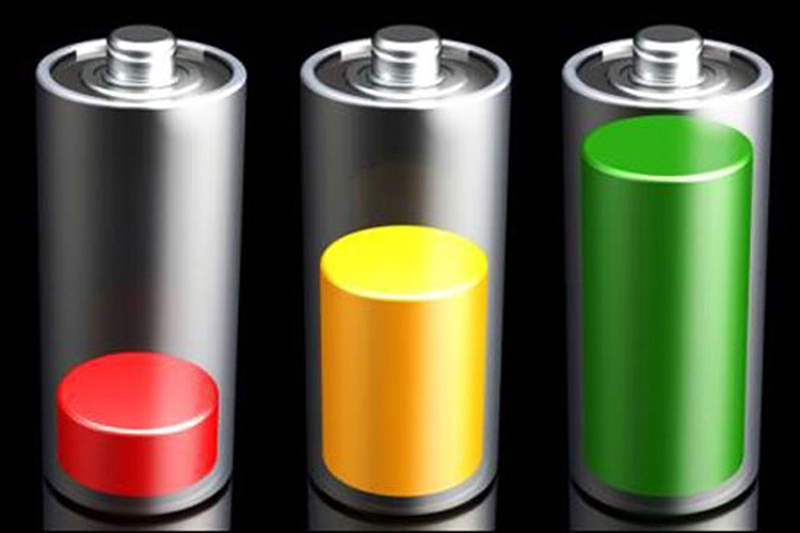
Next comes electrochemical performance testing, measuring residual capacity, voltage, and energy retention compared to original design specifications. Batteries showing excessive degradation or instability will be deemed unsuitable for reuse. Safety testing under thermal and mechanical stress is also required, simulating conditions such as fast charging, deep discharging, and high temperatures to determine resilience and risk of failure. Only batteries meeting all technical criteria may be reused or remanufactured.

Material suitability is another key requirement. Non-metallic materials used for casings, insulation, or thermal protection must demonstrate adequate thermal, electrical, and fire-resistant properties. Metallic components must resist corrosion and, if used in current-carrying parts, be made of acceptable conductive metals. Battery enclosures must be appropriate for their intended applications, whether integrated into devices or serving as standalone protective housings.

Equally important is classification and traceability. Each battery must be assigned a technical record after evaluation, including origin, usage history, test results, and safety classification. This ensures traceability throughout the battery’s extended lifecycle and supports risk management.

Facilities conducting battery assessments and recycling must be equipped with specialized testing devices, standardized operating procedures, and trained technical staff. Fire safety, chemical handling, and environmental protection are mandatory requirements for these operations.

The adoption of TCVN 14474:2025 is expected not only to reduce risks in battery reuse but also to advance the circular economy in the energy sector. Properly evaluated and repurposed batteries extend product lifespans, reduce reliance on new resource extraction, and minimize hazardous waste.

As demand for energy storage continues to rise—particularly in electric transportation and renewable energy—the standard provides a vital foundation for developing a safer, more transparent, and sustainable market for repurposed batteries in the future.

https://vietq.vn
Most viewed news

Applying technology to improve the quality of the population.

Population quality is key to unlocking the door to sustainable national development. Implementing Resolution No. 21-NQ/TW of the 12th Central Committee of the Communist Party of Vietnam on population work in the new situation, the Military Institute of Clinical Embryology (Military Medical Academy) has been a pioneer in applying modern scientific and technological achievements to help infertile families have children, while also performing screening techniques to eliminate genetic diseases.

Vigorously implement and focus on key areas of semiconductor industry development.

The government has mandated that 2026 should be a year of "Decisive Implementation - Synchronized Coordination - Focused on Key Areas - Creating Substantive Results," thereby promoting Vietnam's deeper participation in the global semiconductor industry.

PTIT aims to become a leading institution in training and strategic technology research.

On March 31, 2026, the Ministry of Science and Technology officially approved the Project "Continuing to develop the Posts and Telecommunications Institute of Technology as an organization specializing in training, in-depth research in science and technology, innovation and digital transformation in the period 2026-2035". This is a crucial turning point, positioning the Institute as a leading institution in the country's strategic technology fields.

By the end of 2026, 100% of staff will be proficient in using digital platforms to support their work

This is one of the tasks outlined in Directive No. 14/CT-TTg dated April 22, 2026, of the Prime Minister on promoting the training and assessment of digital knowledge and skills for officials, civil servants, and public employees, which was recently signed by Deputy Prime Minister Pham Thi Thanh Tra.

Developing Thoi Hung custard apple brand, Co Do district, Can Tho city

Can Tho City Department of Science and Technology organized a Mid-term Evaluation Council for the science and technology task of developing the Thoi Hung Soursop Brand, Co Do District, Can Tho City. The Council was presided by Dr. Ngo Anh Tin - Director of the Department of Science and Technology. The study was carried by Nguyen Khac Phi - Branch of Investip Industrial Property Joint Stock Company (Hanoi City), and Tran Thi Thien Thu - Can Tho City Farmers' Association.

Current status and solutions for developing smart tourism systems to attract tourists to Can Tho city - Strategic direction for tourism industry in the digital age

In the afternoon of June 5, 2025, Can Tho City Department of Science and Technology held a meeting of the City-level Council for the acceptance evaluation of the social science project "Current status and solutions for developing a smart tourism system to attract tourists to Can Tho City". Dr. Ngo Anh Tin - Director of Can Tho City Department of Science and Technology was the Chairman of the Council. The project was carried out by Prof. Dr. Ha Nam Khanh Giao; Vietnam Aviation Academy was an implementing unit.

Conference to discuss the organizational arrangement of the Department of Science and Technology when merging Can Tho City, Soc Trang Province, and Hau Giang Province

In the afternoon of May 29, 2025, leaders of Departments of Science and Technology of Can Tho City and Hau Giang and Soc Trang provinces had a meeting to discuss plans to rearrange and reorganize the apparatus of the Department of Science and Technology after merging and consolidating the areas of these three localities.

Selection of scientific and technological project "Research on microbial preparations to decompose starch or food additives sodium benzoate in wastewater"

In the morning of May 29, 2025, Can Tho City Department of Science and Technology held a meeting of the Council for selecting organizations and individuals to preside over the city-level science and technology project "Research on microbial preparations to decompose starch or food additives sodium benzoate in wastewater.” The study will be carried by Dr. Nguyen Thi Phi Oanh. Can Tho University is an implementing agency.

Evaluation and acceptance of the scientific and technological project "Research on diversifying processed products from jackfruit (Artocarpus heterophyllus LAM)"

In the afternoon of May 27, 2025, Can Tho City Department of Science and Technology held a meeting of the Advisory Council to evaluate and accept the results of the implementation of the scientific and technological project "Research on diversifying processed products from jackfruit (Artocarpus heterophyllus Lam)." The project was carried out by Associate Professor, Dr. Bach Long Giang. Nguyen Tat Thanh University was an implementing agency; Science and Technology Advances Application Center, Vietnam - Korea Industrial Technology Incubator were coordinating units.

Related news
CAN THO CITY DEPARTMENT OF SCIENCE AND TECHNOLOGY

Copyright @ 2021 belongs to the Can Tho City Department of Science and Technology
Address: No. 02, Ly Thuong Kiet, Ninh Kieu Ward, Can Tho City
Phone: 0292.3820674, Fax: 0292.3821471; Email: sokhcn@cantho.gov.vn
Head of the Editorial Board: Mr. Tran Dong Phuong An - Deputy Director of the
Can Tho City Department of Science and Technology

Copyright © 2021 All rights reserved | This template is made by CASTI'1987