Enhancing the capacity for monitoring, surveillance, and warning of radioactive elements in the environment.
The Prime Minister has just issued Decision No. 710/QD-TTg on the establishment of the National Environmental Radiation Monitoring and Warning Network, aiming to strengthen the capacity to monitor, supervise, and warn of radioactive elements in the environment.
According to the Decision, the National Environmental Radiation Monitoring and Warning Network is established by connecting and linking existing agencies and units under ministries, sectors, and localities with related functions and tasks.
The network is organized uniformly nationwide.
Establishing and operating an environmental radiation monitoring system aims to regularly monitor and promptly detect abnormal radiation levels in the environment across a wide area of Vietnam, and to meet the requirements for the development and application of atomic energy in the new context.
The network is tasked with providing information and data for early warning and response to radiation incidents, nuclear accidents, civil defense, and nuclear security. Monitoring data is managed and shared on a national digital platform, serving state management activities in atomic energy and related fields.
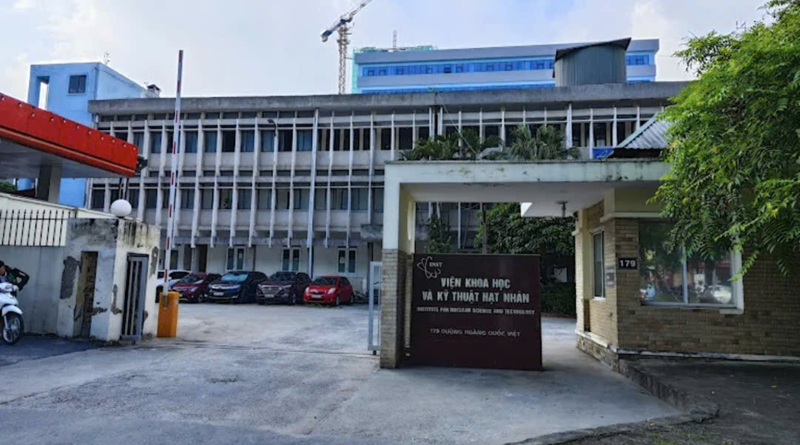
In Hanoi, the Environmental Radiation Monitoring and Warning Station is managed by the Institute of Nuclear Science and Technology.
The network monitors domestic radioactive sources, tracks and assesses the impact of radiation and nuclear facilities outside Vietnam that may affect the country. Simultaneously, the system is required to integrate with the national environmental database, contributing to the completion of the data infrastructure for overall management.
According to the Decision, the National Environmental Radiation Monitoring and Warning Network is organized uniformly throughout the country, including:
The Environmental Radiation Monitoring and Warning Operations Center (Operations Center), located in Hanoi, is managed by the Institute of Nuclear Science and Technology (Vietnam Atomic Energy Institute).
The regional environmental radiation monitoring and warning stations (Regional Stations) consist of 4 stations: In Hanoi, managed by the Institute of Nuclear Science and Technology; in Da Nang, managed by the Center for Radiation Technology Research and Development - Da Nang Irradiation Facility; in Lam Dong, managed by the Institute of Nuclear Research; and in Ho Chi Minh City, managed by the Ho Chi Minh City Nuclear Center.
Provincial-level environmental radiation monitoring and warning stations (Local Stations) comprise 34 stations located in various provinces and cities. In addition, there are grassroots-level environmental radiation monitoring and warning stations (Basic Stations) and the Military's Environmental Radiation Surveillance, Monitoring, and Warning System (Military Environmental Radiation Monitoring and Warning System).
The network operates on the principles of coordination, interconnection, and information and data sharing; ensuring uniformity, synchronization, and efficiency; and complying with legal regulations on environmental monitoring, radiation and nuclear safety, investment, public investment, and other relevant legal provisions.
The monitoring systems and stations belonging to ministries, sectors, and localities participating in the Network are organized according to their assigned functions and tasks; they are restructured based on existing units, through the addition of appropriate functions and tasks, without creating new organizations.
The placement of monitoring stations in border provinces must ensure the ability to monitor, detect, and provide early warning of transboundary environmental radiation incidents.
.png)
In Lam Dong province, the environmental radiation monitoring and warning station is managed by the Institute of Nuclear Research.
The Ministry of Science and Technology is the focal agency of the Network.
The Ministry of Science and Technology is the focal agency of the Network, responsible for coordinating overall activities; developing, promulgating, and organizing the implementation of the Network's organizational and operational regulations; compiling and reporting on the implementation status as required; and periodically and unexpectedly exchanging information and monitoring data with the Ministry of Public Security, the Ministry of National Defense, and the Ministry of Agriculture and Environment to serve the work of ensuring national security, defense, and environmental protection.
The Ministry, central agencies, and local authorities shall preside over and propose budget estimates for state expenditures in the fields of science, technology, innovation, and digital transformation (including funding for the national environmental radiation monitoring and warning network), and submit them to the Ministry of Finance for consolidation and submission to the competent authority for decision.
The establishment of the Network is expected to create an important foundation for enhancing the capacity to monitor the radioactive environment, proactively detect and address risks, and effectively serve the requirements for the development and application of atomic energy in the coming period.
https://mst.gov.vn