The cryptocurrency pilot program needs to establish a standardized monitoring and operational mechanism
The development of the cryptocurrency market in Vietnam is at a critical juncture. While the potential is enormous, the challenges regarding legal frameworks, security, and market awareness are also significant.
On March 25th, the State Securities Commission and the Ministry of Finance, in collaboration with the Vietnam Blockchain and Digital Assets Association, organized a dialogue titled "Pilot Program on Cryptocurrency: Monitoring Mechanisms, Operational Capacity, and Investment Standards".
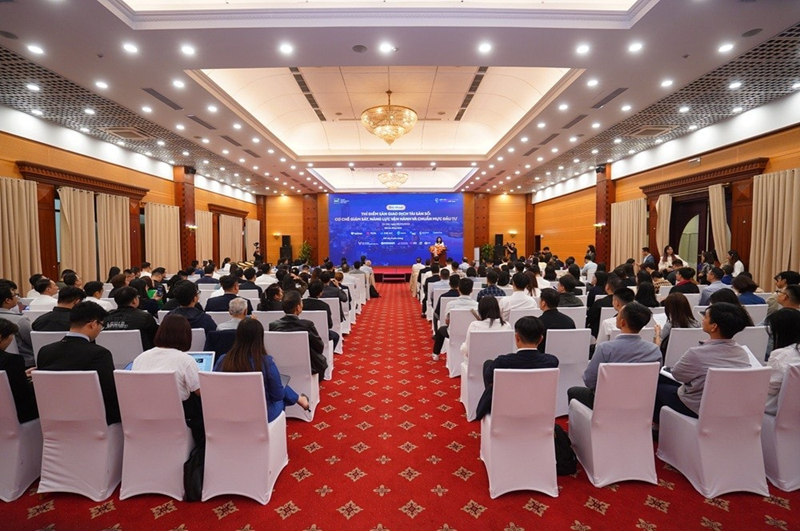
Dialogue “Pilot Digital Asset Exchange: Monitoring Mechanism, Operational Capacity, and Investment Standards”.
Establishing a robust legal framework is a key factor.
Speaking at the event, Mr. Phan Duc Trung, Chairman of the Vietnam Blockchain and Digital Asset Association (VBA), said that the cryptocurrency market in Vietnam is following the global trend and is strongly affected by the complex fluctuations of the macroeconomic environment.
Against this backdrop, investor sentiment remains largely apprehensive, particularly regarding the transparency and security of exchanges operating during this "transitional" phase.
Organizing dialogue sessions between regulatory bodies and the market is crucial, not only to help regulatory bodies listen to practical experiences, but also to create a space for businesses and exchanges, especially those seeking licensing, to explore development opportunities and reach customers.
Mr. Phan Duc Trung also stated that developing the digital asset market is not only an opportunity but also a major challenge for regulatory agencies, businesses, and investors alike.
However, if a suitable framework is established, this will be a crucial driver of economic growth, while simultaneously strengthening market confidence and guiding the country's development.
In a discussion on the situation of high-tech crimes related to crypto assets and some recommendations, Colonel Hoang Ngoc Bach, Head of Department 4, Cyber Security and High-Tech Crime Prevention and Control Bureau (A05), Ministry of Public Security, warned of many worrying risks when the crypto asset market is not yet fully regulated.

Colonel Hoang Ngoc Bach, Head of Department 4, Cyber Security and High-Tech Crime Prevention and Control Bureau (A05), Ministry of Public Security.
Most fraud cases involving the misappropriation of assets have one thing in common: the stolen money is transferred to cryptocurrency exchanges. This makes verification, tracing, and recovery of assets extremely difficult.
In addition, in recent times, many fake platforms and fraudulent schemes have emerged, soliciting investments and then misappropriating assets. Due to the highly anonymous nature of the internet, tracking down and prosecuting these individuals faces many obstacles.
When establishing a domestic trading platform, it is necessary to consider solutions for managing and protecting citizens' data from the outset, avoiding a repetition of past vulnerabilities.
Previously, when people participated in foreign trading platforms, they had to provide their national identity card, phone number, email address, and even bank account information. All of this data was stored abroad, posing a risk of being exploited or illegally traded.
"Many sophisticated scams stem from criminals gaining access to personal data. They can even use leaked images and information to create fake documents, open online accounts, and bypass Know Your Customer (KYC) verification processes to facilitate their criminal activities," said Colonel Hoang Ngoc Bach.
Licensed organizations must invest in robust technology systems to prevent cyberattacks, ensure a high level of information security, undergo regular assessments, and coordinate with authorities for remote monitoring.
Furthermore, organizations need mechanisms to verify the source of investment funds. Currently, there are no clear regulations on determining the legality of funds flowing into the cryptocurrency market. This is a gap that needs to be filled to prevent money laundering.
According to Colonel Hoang Ngoc Bach, experience from developed countries such as the US and Europe shows that building a robust legal framework is a key factor. It is necessary to study and selectively adopt these principles to suit local conditions, with the goal of both promoting legitimate investment activities and ensuring the safety of the financial system, while contributing to economic development.
A test of technology, human resources, and trust.
During the pilot phase, the regulatory agency stated that it would take a cautious, step-by-step approach, focusing on assessing the actual operational capabilities of the businesses.
According to Mr. To Tran Hoa, Deputy Head of the Standing Committee of the Asset Trading Market Management Board, State Securities Commission, in addition to statutory conditions such as charter capital and shareholder structure, the regulatory body will focus on the technology system, the experience of the team, and the level of transparency in operations.
Notably, in the initial phase, only investors who already own crypto assets on international exchanges will be allowed to trade on the domestic exchange. Simultaneously, the State Securities Commission will coordinate with ministries and agencies to implement knowledge dissemination programs to raise awareness and mitigate risks for investors.
A key principle emphasized by experts is the segregation of client assets from the exchange's assets, a core element in protecting investors in all situations. Simultaneously, risk response scenarios are being developed, including: early warning mechanisms and allowing investors to proactively manage their assets in the event of unusual fluctuations.
The event also included a discussion on strategies for attracting investors to cryptocurrency exchanges in their initial stages. Speakers addressed factors that retain Vietnamese investors, including liquidity, optimized user experience, product diversity, and security. Several successful cryptocurrency exchange models were presented, such as wallets, liquidity creation, foreign exchange conversion, and cryptocurrency service providers.