Ho Chi Minh City: Promoting the transition to low-emission personal transportation
“Promoting low-emission personal motorized transport in Ho Chi Minh City: Technological, policy and market solutions” was the theme of a workshop organized by the Ho Chi Minh City Department of Construction in collaboration with the United Nations Development Programme (UNDP) on March 31, 2026.
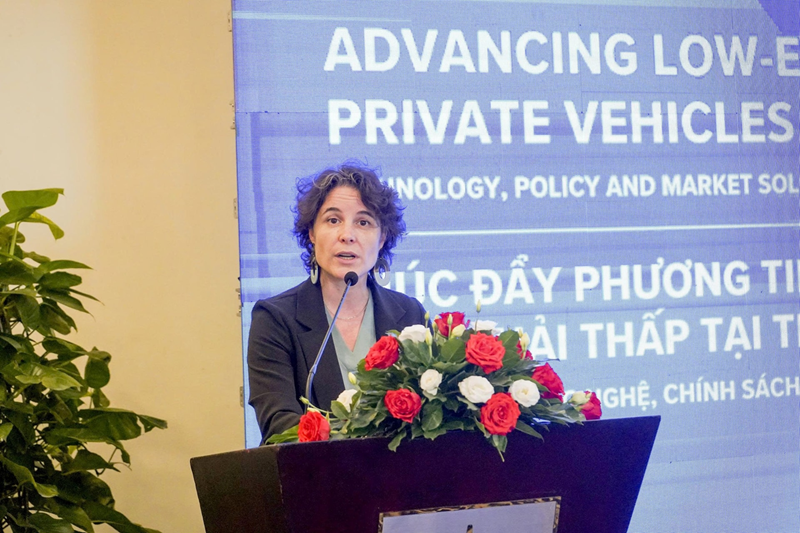
Ms. Francesca Nardini, Deputy Representative of UNDP in Vietnam, speaks at the workshop. (Photo: PV).
The workshop took place in the context of Ho Chi Minh City's efforts to promote emission reduction solutions in the transportation sector, in order to respond to climate change and improve air quality.
In his opening remarks at the workshop, Mr. Bui Hoai An, Deputy Director of the Ho Chi Minh City Department of Construction, emphasized that developing green transportation is not only a trend but also a foundation and important driving force for socio-economic development in countries around the world. In Vietnam, developing green transportation is not only a mandatory requirement but also a crucial breakthrough, not simply an application of technology, but a comprehensive revolution in institutions, human resources, and national governance. This is the driving force for building and developing a domestic industry capable of technological self-reliance, especially in strategic technologies; and promoting deep, effective, and substantive cooperation.
Ms. Francesca Nardini, Deputy Representative of UNDP in Vietnam, said that UNDP is working closely with the Vietnamese Government to translate national climate commitments into concrete, evidence-based actions.
Francesca Nardini emphasized that a key takeaway from this process is: There is no single solution. A successful transition requires a holistic approach, combining policy, investment, and partnerships, while mobilizing state leadership, private sector innovation, and citizen participation.
At the workshop, delegates presented and discussed key topics such as: comparing low-emission vehicle technologies; assessing market and infrastructure readiness; analyzing user behavior, as well as policy mechanisms and investment opportunities, etc.
Representatives from all sides also discussed priority actions and pilot models that could be implemented in the near future to promote public-private cooperation and develop a clean transportation ecosystem. The results and recommendations from the workshop will support Ho Chi Minh City in refining policies, guiding investment, and implementing specific solutions to promote the transition to low-emission private vehicles in the coming period.