NAFOSTED organized a seminar to gather feedback from scientists on the draft of the new Decree.
Nearly 100 scientists participated in providing feedback on the Draft Decree regulating the organization and operation of the National Fund for Science and Technology Development (NAFOSTED), with many important proposals aimed at improving the legal framework and enhancing the independence, transparency, and effectiveness of scientific research funding.
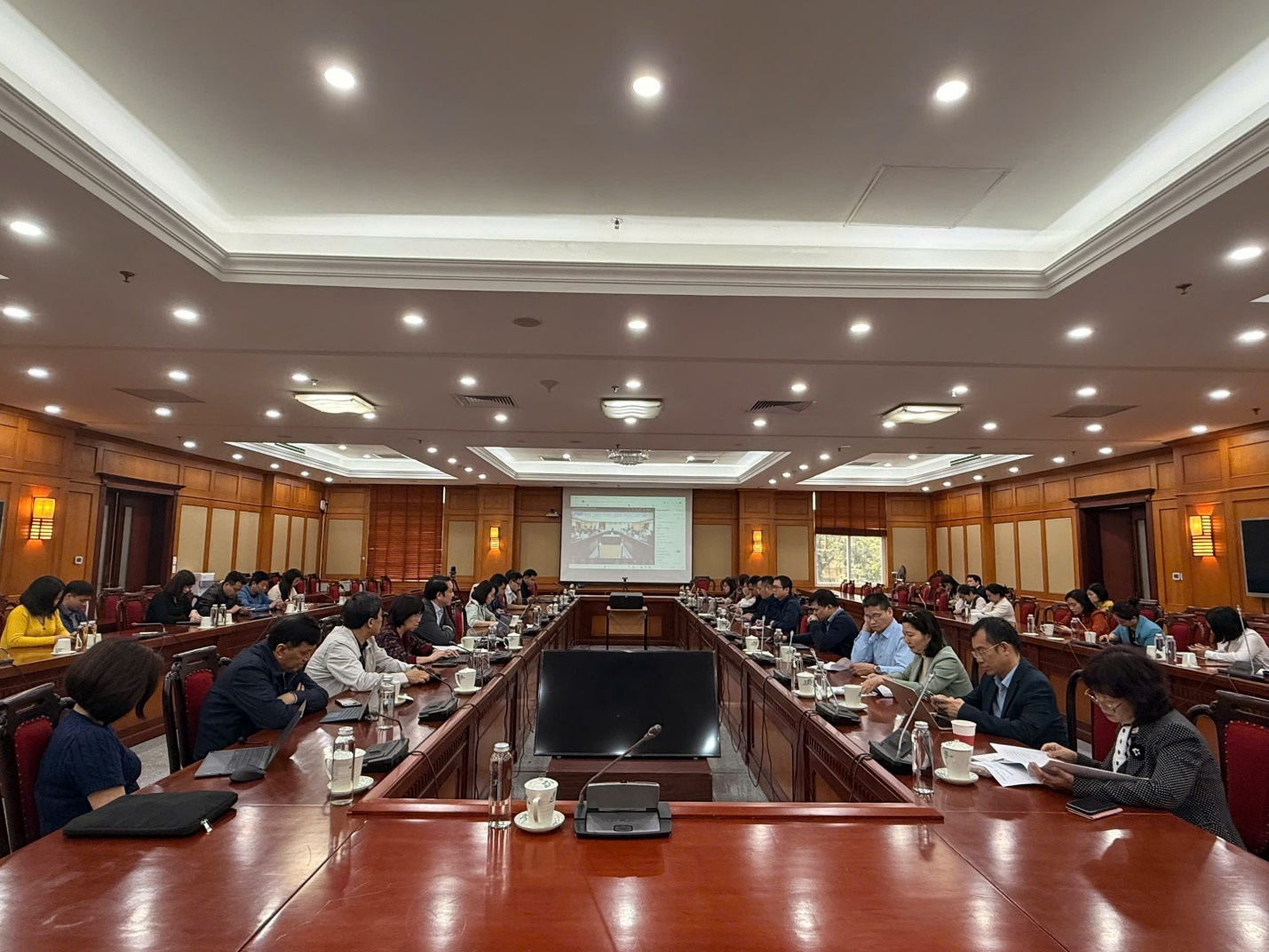
Overview of the seminar.
Recently, NAFOSTED organized a seminar to solicit opinions from scientists on the draft Government Decree regulating the organization and operation of the Fund. The seminar was held in a hybrid format, combining in-person and online participation, attracting nearly 100 scientists who are members of specialized scientific councils.
In his opening remarks at the seminar, NAFOSTED Director Dao Ngoc Chien emphasized the necessity of issuing the new Decree in the context of the Law on Science, Technology and Innovation having come into effect and Resolution 57-NQ/TW setting many new requirements for the national science and technology system. Accordingly, the new Decree is expected to create a more open legal framework, shorten the selection process, enhance transparency, independence and efficiency in research funding activities; and strengthen the role of connecting the domestic and international scientific community.
The draft Decree comprises 5 Chapters and 20 Articles, focusing on clarifying the position, functions, tasks, and powers of the Fund; establishing the principles of independent, objective, and transparent operation; improving the Fund's organizational structure and proposing a model for an advisory council to the Fund Director; innovating the financial mechanism, funding methods, and evaluation of science and technology tasks; and supplementing regulations on international cooperation, transparency, and accountability.
At the seminar, scientists contributed many practical and in-depth ideas. Many delegates suggested clarifying the role of the Fund in connecting the scientific community domestically and internationally; supplementing regulations on specialized scientific councils; improving the mechanism for evaluating tasks based on their impact; and increasing transparency in the selection and acceptance of research projects. In addition, opinions also proposed expanding co-funding cooperation with international organizations and funds; reviewing the financial mechanism and the method of calculating average annual funding; standardizing professional terminology; and supplementing regulations on accountability and reporting.
At the end of the discussion, the NAFOSTED representative affirmed that they would incorporate all feedback, synthesize it, and conduct further research to finalize the draft before submitting it to the competent authorities for consideration and promulgation.
The seminar is not only an important step in the process of improving the institutional framework but also demonstrates NAFOSTED's open-minded and transparent spirit, affirming the role of the scientific community in policy making and promoting the development of science, technology, and innovation in the country.
Center for Science and Technology Communication