Son La province is stepping up efforts to popularize digital skills and deepen the "Digital Literacy Program for the People".
Implementing Resolution No. 57-NQ/TW, Son La province is promoting the "Digital Literacy Movement" in a practical manner, spreading widely to the grassroots, helping people gradually master technology, and forming a foundation for sustainable digital economic and social development.
In the context of rapid digital transformation, Son La province has identified the popularization of digital skills among its people as a key, long-term task. Following the directives of the Central Government and concretizing Resolution No. 57-NQ/TW, the province has implemented a comprehensive range of solutions to bring digital technology closer to daily life.
The "Digital Literacy Movement" has been implemented throughout Son La province with a flexible approach, closely aligned with reality, aiming to ensure that all citizens can access, use, and effectively utilize digital platforms in their studies, work, and daily lives.
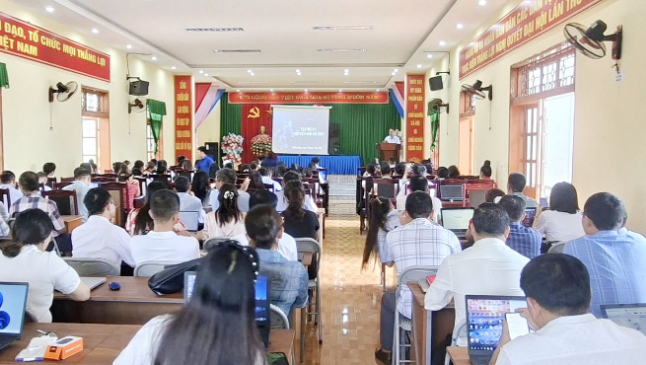
The Son La Department of Science and Technology organized a training course on digital transformation and the application of artificial intelligence (AI) in Chieng Mung commune.
The Department of Science and Technology plays a key role, leading the process of advising, guiding, and overseeing implementation. Public awareness campaigns are intensified through various channels, from newspapers to digital media platforms, contributing to raising social awareness of the role of digital transformation. Activities such as "National Digital Learning Day," community classes, and digital skills training are regularly organized, creating a flexible and accessible learning environment for the public.
Many innovative implementation models have proven remarkably effective. The "Digital Ambassador" model mobilizes grassroots forces to directly guide people in using online public services, digital payments, and essential platforms. The "Digital Family" model uses each household as a core element to spread digital skills, gradually forming the habit of applying technology in daily life.
Furthermore, online learning platforms and digital tools, including artificial intelligence applications, are being introduced to support learning and work, helping to improve information processing efficiency and save time and costs. Cybersecurity is also being prioritized, linked to the process of popularizing digital skills.
Departments, agencies, and localities in the province should proactively develop appropriate implementation plans. The education sector should integrate digital skills into the curriculum; the youth union should play a leading role with volunteer teams to support the people; and the police force should strengthen guidance on using online public services while ensuring information security.
In particular, digital skills training has been widely implemented in remote areas and areas inhabited by ethnic minorities, with the motto "hands-on guidance," helping people gradually become familiar with and use digital technology in a practical way.
In practice, the "Digital Literacy Movement" in Son La is shifting from a propaganda and mobilization phase to a more in-depth phase, with effectiveness as the measure. People are not only accessing technology but are also gradually applying it to production, business, learning, and daily life.
In the coming period, the province will continue to refine mechanisms and policies; strengthen investment in digital infrastructure; develop human resources; and expand effective models for popularizing digital skills. This will create a solid foundation to promote comprehensive digital transformation, contributing to sustainable socio-economic development in the new era.
Center for Science and Technology Communication