3 factors shaping Vietnam's aquaculture industry
Ho Chi Minh City – To enhance competitiveness, Vietnam's aquaculture industry needs to focus on three core elements: technology, breeding stock, and market.
This information was shared by Mr. Tai Chu Chun, a Taiwanese expert, at the " National Conference on Fisheries Science and Technology and Fisheries Inspection 2026" held on April 28th in Ho Chi Minh City.
According to Mr. Tai Chu Chun, Asia is currently the center of global aquaculture, with Vietnam among the countries playing a significant role. However, behind this growth, the aquaculture industry is also facing many pressures.
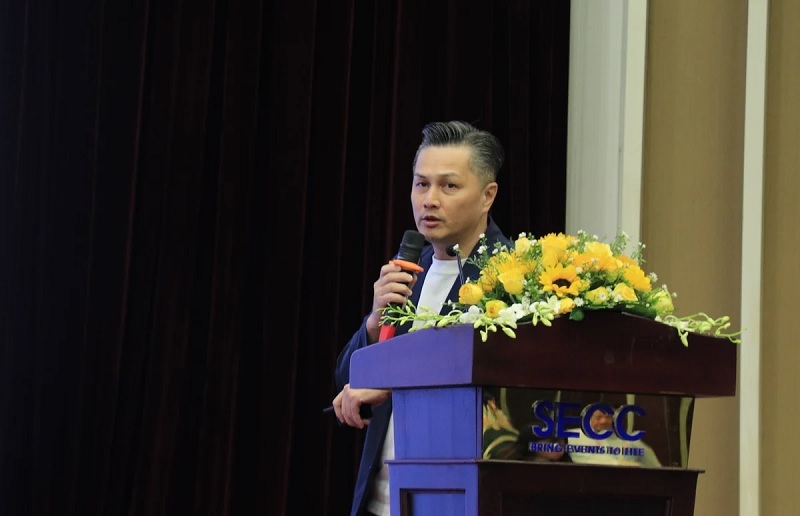
Mr. Tai, Chu Chun - an expert from Taiwan, China, shared his insights at the 2026 National Conference on Fisheries Science and Technology and Fisheries Inspection. Photo: Ha Duyen.
Accordingly, China – the world's largest aquaculture producer – is also facing rising production costs, from labor to feed. Meanwhile, the physically demanding nature of the work is making young workers increasingly less interested in the industry.
Besides costs, land-related barriers and increasingly stringent regulations also limit the potential for production expansion. Natural seed sources are declining, quality is unstable, and survival rates are lower compared to cultured seeds. Furthermore, water pollution and high stocking densities continue to reduce efficiency.
One notable issue is the lack of direction in development. Many farmers chase price signals, choosing species to raise without considering environmental conditions or consumer demand. When the market is favorable, they raise livestock on a massive scale, leading to oversupply, driving down prices, and increasing risks.
According to Tai Chu Chun, what is happening in China and some countries in the region is a clear lesson for countries that are following in his footsteps.
Mr. Tai, Chu Chun believes that Vietnam has many favorable conditions for developing aquaculture, such as a suitable natural environment, proximity to large markets, and seafood processing capacity.
However, expanding production cannot be done in the traditional way. Instead, marine aquaculture needs to be reorganized towards industrialization, in which the entire chain from broodstock and feed to farming processes must be researched and designed from the outset.
One of the key points emphasized is optimizing breeding stock. According to Mr. Tai Chu Chun, if breeding stock is not optimized, the consequences can last 5-10 years, affecting the entire production cycle. Conversely, when breeding stock is optimized, farmers can calculate survival rates, input costs, and output prices. These are crucial factors determining competitiveness.
Besides optimizing the breed, a thorough assessment of the rearing environment and adaptability is necessary. Raising the wrong species or raising them indiscriminately can easily lead to oversupply and price drops, as has been the case in many markets in the region.
According to this expert, Vietnamese aquaculture cannot simply serve the domestic market but needs to position itself within the global supply chain. This requires diversifying markets and products, instead of relying on a single market as before.
He cited the example of the Philippines, where, despite favorable natural conditions for grouper farming, domestic demand is low, forcing production to be linked to external markets. "Choosing a species to farm should not only be based on natural conditions but also on market demand," he emphasized.
Based on the above analysis, he argued that Vietnam needs to build a sustainable and competitive aquaculture industry. Three key factors are crucial: production technology, optimized breeding stock, and a global market mindset. Without careful planning and coordinated implementation from the outset, the aquaculture industry could face long-term consequences, ranging from high costs to supply-demand imbalances.
Conversely, if Vietnam makes good use of its advantages and transforms in the right direction, it has the opportunity to participate more deeply in the global seafood value chain, aiming to create products with sustainable competitive positions in the region.
https://nongnghiepmoitruong.vn/