When digital skills become a habit for rural people.
In the national digital transformation process, popularizing digital skills among all citizens, especially in rural areas, is becoming a crucial task to ensure inclusive development. Practical implementation in many localities shows that, when the approach is appropriate, people-oriented, and practical, digital technology can become an integral part of people's daily lives.
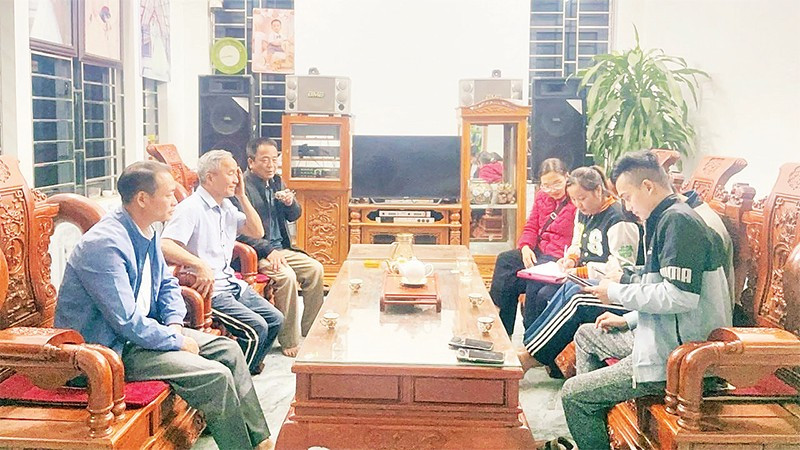
Community digital technology teams provide guidance to residents at home.
In some rural communes, the "Digital Literacy Movement" is being implemented in a flexible, community-centered manner, thereby gradually forming digital habits in daily life, production, and access to public services.
From a people-friendly and accessible approach.
One common feature in the implementation of the movement at the grassroots level is the flexible organizational method, adapted to the conditions and pace of life of the people. Instead of organizing large-scale, lengthy classes, many localities choose to provide guidance in small groups at village cultural centers, residential areas, or directly at households.
The content focuses on essential skills relevant to real-world needs, such as: using smartphones, installing and using applications for online public services, integrating personal documents into digital platforms, cashless payments, and identifying information security risks in cyberspace.
A notable feature is the "do-it-yourself" approach. The instructor directly demonstrates and explains each step, then lets people practice on their own devices. Seemingly complex tasks like creating accounts, setting passwords, or verifying personal information are "simplified" to suit all users, including the elderly.
This approach has helped to eliminate the fear of technology, enabling people to gradually access and use digital services proficiently.
Enhancing the role of local forces
The "Popular Digital Literacy Movement" at the grassroots level demonstrates the important role of local forces, especially young cadres, union members, youth, and community digital technology groups.
These forces are not only guides but also bridges between the government and the people in the digital transformation process. Following the motto "going door-to-door," community digital technology teams directly visit each household to assist with application installation, provide usage instructions, and answer any questions.
Integrating digital transformation content into Party branch meetings, village meetings, and mass organization activities also contributes to making digital skills a familiar part of community life. Through this, people not only learn but also have the opportunity to exchange and share experiences and support each other.
Developing digital habits in daily life.
From these initial steps, people gradually developed the habit of using technology in their daily lives. Searching for information, carrying out administrative procedures, paying for essential services, or studying on digital platforms became more common.
In particular, when people see practical benefits such as saving time, reducing travel costs, and convenience in transactions, they proactively participate in and maintain the use of digital platforms. In many cases, after receiving guidance, they have been able to help relatives and neighbors, creating a ripple effect in the community.
Experience has also shown that when officials and Party members take the lead in learning and using digital technology, the movement spreads more strongly, contributing to strengthening the trust and consensus of the people.
Experience in implementing "Digital Popular Education" in localities shows that several factors are decisive: the synchronized involvement of the entire political system; flexible organization tailored to each target group; practical and easy-to-understand training content; and direct and persistent guidance.
In particular, linking the popularization of digital skills with the real needs of the people is a crucial factor for the movement to have depth. When people clearly see the benefits and can apply them immediately to their lives, learning digital skills is no longer a campaign but becomes a self-driven need.
Towards sustainable development in digital transformation.
In the coming period, in order for the "Digital Literacy Movement" to continue to be effective, it is necessary to further improve the digital infrastructure, expand access to technology, and enhance the capacity of grassroots officials.
In addition, diversifying training methods, combining in-person and online approaches, along with promoting the role of community-based digital technology groups, will be important solutions to expand the reach of the movement.
It can be affirmed that, through specific and practical methods at the grassroots level, the "Digital Literacy Program for the People" is gradually bringing technology closer to rural people. This is not only an immediate solution to improve digital skills, but also an important foundation for building a digital society, contributing to promoting sustainable socio-economic development in the new era.
Center for Science and Technology Communication