Technology as a Modern Memory Keeper: How Digital Innovation Is Transforming Holiday Experiences into Shared Life Stories
Major holidays such as Vietnam’s Reunification Day (April 30) and International Workers’ Day (May 1) have long been moments for rest, reunion, reflection, and celebration. Yet in the digital age, these occasions are increasingly becoming more than personal experiences—they are now opportunities for people to document, shape, and share their lives in real time. As mobile imaging, artificial intelligence, and social connectivity continue to evolve, technology is fundamentally changing how people preserve memories, tell stories, and connect emotionally during culturally significant moments.
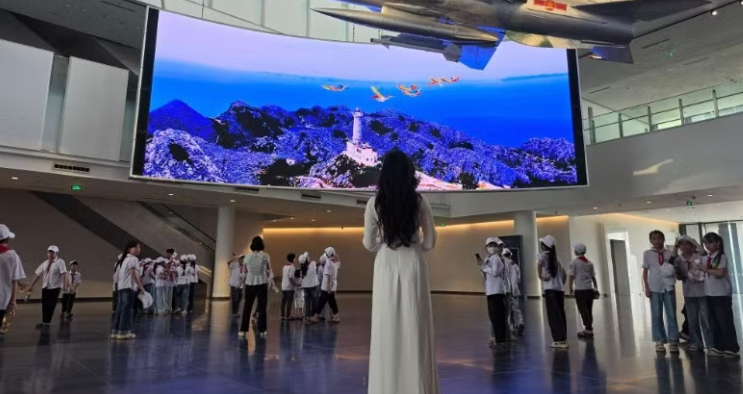
Holiday periods naturally create diverse human experiences. Some people travel to beaches, mountains, or cultural landmarks; others remain in cities, enjoying food, festivals, or precious family time. Traditionally, these memories might have lived only in conversation, printed albums, or fading recollection. Today, however, a smartphone can instantly transform a fleeting moment into a lasting digital narrative.
This shift represents a broader cultural evolution: photography is no longer simply about documentation—it has become storytelling.
Modern mobile devices now allow users to capture not just visual records, but emotional context. A family dinner, a crowded festival street, a peaceful evening walk, or a patriotic celebration can all become rich narrative fragments when paired with advanced imaging systems that preserve lighting nuance, realistic color, and environmental detail. The result is that everyday life itself becomes a form of shareable cultural expression.
The growing role of AI further amplifies this transformation. Features such as scene optimization, low-light enhancement, and AI-assisted editing reduce the technical barriers that once separated casual users from high-quality visual storytelling. Users no longer need professional photography expertise to create compelling content. Instead, technology increasingly acts as a creative collaborator—helping frame, enhance, and refine moments while preserving spontaneity.
This is particularly relevant during crowded public holidays, where lighting challenges, movement, and busy environments can complicate photography. Advanced features like night photography and AI-powered post-editing tools enable users to remove distractions, adjust composition, and improve visual clarity without losing the authenticity of the original moment.
Importantly, this technological shift is also social. Digital memories are no longer stored privately—they are shared instantly across families, friendships, and online communities. A holiday memory can now travel beyond the individual, contributing to collective cultural narratives. In this way, technology strengthens both personal memory and social connection.
Devices such as next-generation smartphones are therefore increasingly positioned not merely as hardware products, but as lifestyle tools that support emotional preservation, identity expression, and cultural participation.
However, the deeper significance lies beyond consumer electronics. Technology is reshaping how societies remember. It is democratizing memory-making by giving millions of people the ability to document their lives with sophistication once reserved for professionals.
Ultimately, during major holidays, technology becomes more than convenience—it becomes part of the experience itself.
By helping people capture meaningful details, preserve emotional resonance, and share stories widely, digital tools are expanding the value of celebration beyond the moment.
In an age where every image can become a story and every story can strengthen connection, the true power of technology lies not only in sharper cameras or smarter AI, but in its ability to help people remember more vividly, communicate more deeply, and transform ordinary life into a shared human archive.