Solar Energy Integrated with Agriculture: A Strategic Pathway for Vietnam’s Sustainable Future
As the global transition away from fossil fuels accelerates, solar energy has become one of the most critical pillars of sustainable development. In agricultural economies like Vietnam, where food production and energy security are equally vital, combining solar power generation with agricultural cultivation offers an especially promising solution. This integrated “agrivoltaics” or solar-agriculture model is emerging not only as a clean energy strategy, but also as a transformative approach to maximizing land productivity, improving rural resilience, and enhancing long-term economic efficiency.
In recent years, Vietnam has gradually implemented several solar-agriculture projects, reflecting growing recognition of this dual-use approach. Large-scale initiatives in Ninh Thuận and Bình Thuận have demonstrated the feasibility of combining solar farms with crops such as vegetables, tomatoes, apples, garlic, and other agricultural products. Smaller pilot projects in Lâm Đồng have also explored integrating solar systems with corn, potatoes, and artichokes, while household-level applications increasingly use solar power for irrigation, lighting, and environmental monitoring systems. These projects indicate that Vietnam is actively exploring ways to align its strong solar radiation potential with its agricultural strengths.
However, conventional solar-agriculture systems face a major technical challenge: balancing energy generation with crop productivity. For crops to thrive, solar panels must be spaced widely enough to allow sufficient sunlight for photosynthesis. While this supports plant growth, it reduces panel density and lowers electricity output. This trade-off has limited the efficiency of many existing agrivoltaic models, especially in tropical countries where staple crops such as rice require substantial sunlight.
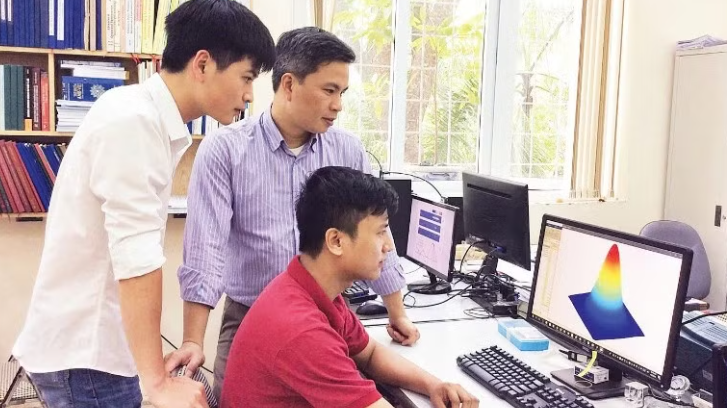
To address this challenge, Vietnamese scientists, in collaboration with South Korean researchers from Myongji University, have developed an innovative solution known as the Red Spectrum Separation Concentrated Agrivoltaics system (RSSCA). This advanced model represents a major technological breakthrough because it is specifically designed to optimize both agricultural and energy outcomes rather than forcing a compromise between them.
The RSSCA system works by selectively separating the red wavelengths of sunlight—an essential spectrum for plant photosynthesis, particularly for crops like rice—and directing them to crops below, while the remaining light spectrum is concentrated and transferred to high-efficiency photovoltaic cells for electricity generation. This design allows plants to receive the most biologically valuable light while preserving, and even enhancing, solar energy production.
According to research findings, the RSSCA model achieved a photoelectric conversion efficiency of 31.2%, significantly outperforming traditional photovoltaic systems, which typically remain below 20%. Under similar environmental conditions, RSSCA can generate three to five times more electricity than standard solar systems while still meeting or exceeding optimal radiation thresholds for rice cultivation. This is particularly important for Vietnam, where rice remains a strategic crop central to food security, exports, and rural livelihoods.
One of the system’s most important distinctions is its crop-specific design philosophy. Unlike many global agrivoltaic systems that are better suited for shade-tolerant vegetables or greenhouse crops, RSSCA was developed with tropical, sunlight-dependent crops in mind. By prioritizing rice as its primary research focus, Vietnamese scientists are addressing the realities of domestic agricultural structure rather than importing generic solutions.
This innovation holds especially strong potential for remote regions, islands, and off-grid rural communities where electricity infrastructure may be limited but agricultural land remains available. In such contexts, RSSCA could simultaneously support local food production, reduce energy poverty, and lower dependence on centralized power systems. It also presents opportunities for reducing agricultural production costs, increasing climate resilience, and diversifying farmer income through energy generation.
Beyond its technical achievements, the project demonstrates the growing capacity of Vietnamese scientific institutions to engage in high-value innovation through international cooperation while maintaining domestic relevance. The success of RSSCA highlights how Vietnam can move from technology adoption toward technology creation—an essential step for strengthening national competitiveness in clean technology sectors.
The broader implications are equally significant. As climate change intensifies, agricultural systems worldwide face mounting pressure from drought, land scarcity, and volatile energy costs. Integrated solar-agriculture systems like RSSCA offer a compelling model for sustainable adaptation, especially in tropical and subtropical countries with abundant sunlight and agricultural dependence. For Vietnam, this is not simply about producing more electricity or more crops—it is about redesigning development systems to create synergy between food security, clean energy, and environmental sustainability.
Ultimately, solar-agriculture integration represents more than a technological experiment; it is a strategic blueprint for the future. By combining scientific innovation, agricultural priorities, and renewable energy development, Vietnam has the opportunity to become a leader in climate-smart agrivoltaic systems. If scaled effectively, technologies like RSSCA could redefine how developing agricultural nations approach both energy and food production in the decades ahead.