University Intellectual Property: A Strategic Resource for Vietnam’s Economic Growth
As global supply chains continue shifting and major technology corporations expand investment in Vietnam, the country is facing a significant opportunity to strengthen its position in high-tech industries. To fully capitalize on this momentum, universities and research institutes are increasingly seen not only as educational centers, but also as vital engines for innovation, intellectual property (IP) creation, and technology commercialization.
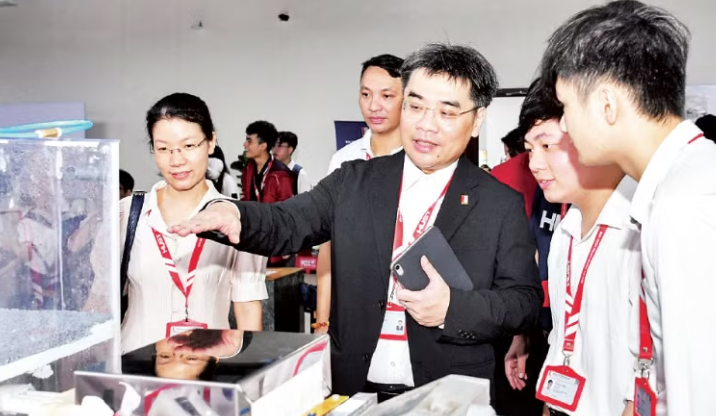
Vietnam’s evolving innovation landscape, supported by national initiatives such as Make in Vietnam, startup ecosystem development, and digital transformation policies, highlights the growing importance of converting laboratory research into market-ready products. In this context, intellectual property generated within universities represents a critical but underutilized economic resource. When effectively developed and commercialized, university-based IP can become a powerful driver of industrial competitiveness, technological independence, and long-term growth.
Hanoi University of Science and Technology (HUST) offers a leading example of this transformation. As one of Vietnam’s top technical universities, HUST is strategically focusing on key sectors such as artificial intelligence, blockchain, robotics, green energy, advanced materials, nanotechnology, and biomedical technology. With more than 300 professors and associate professors and over 800 PhDs, the institution has built a strong scientific base capable of generating valuable patents and research outputs.
What makes HUST particularly notable is its structured commercialization model. The university applies Technology Readiness Level (TRL) standards to guide research from laboratory concepts to market deployment, while also providing full financial support for patent registration and maintenance. This reduces barriers for researchers and creates strong incentives to move beyond academic publication toward real-world application. Such policies help align scientific achievement with economic outcomes.
A major lesson from HUST’s experience is that universities need comprehensive support ecosystems, including IP advisory departments, legal guidance, commercialization incentives, and clear profit-sharing frameworks. The establishment of spin-off companies and partnerships under the “Three-Party Model” (State–University–Enterprise) is especially promising. For example, the Hanoi Innovation Center, founded in 2026 with participation from Hanoi authorities, HUST, and CMC Corporation, reflects a new approach to linking public institutions, academia, and private enterprise for innovation-driven development.
Despite this progress, several structural bottlenecks remain. Vietnam’s domestic technology market is still underdeveloped, with many businesses lacking strong R&D capacity or strategic focus on proprietary innovation. University research also often prioritizes academic publication rankings over commercialization, leaving many projects stalled at low technology readiness levels. Without stronger policy frameworks, technology valuation systems, venture capital support, and legal clarity around IP transfer, commercialization may remain limited.
Recent reforms, including Resolution 57-NQ/TW and provisions under the 2026 Capital Law, are beginning to address these barriers by encouraging risk-taking, protecting researchers from objective failure, and improving tax incentives. However, successful implementation will depend on translating policy into practical, scalable mechanisms.
Ultimately, intellectual property from universities should be viewed as strategic national capital. By strengthening pathways from research to commercialization, Vietnam can transform its academic institutions into innovation powerhouses—supporting domestic technology industries, reducing dependence on imports, and creating a stronger foundation for sustainable economic growth in the decades ahead.