China Discovers Two New Lunar Minerals, Expanding Understanding of the Moon’s Geological History
Using more than 1,700 grams of lunar material returned by the Chang’e-5 mission, Chinese scientists have identified two previously unknown minerals on the Moon: Changesite-(Mg) (Magnesium Changesite) and Changesite-(Ce) (Cerium Changesite). Both discoveries were officially approved by the International Mineralogical Association, marking them as the second and third new lunar minerals identified by China after Changesite-(Y) in 2022, and the seventh and eighth newly recognized lunar minerals globally from returned Moon samples.
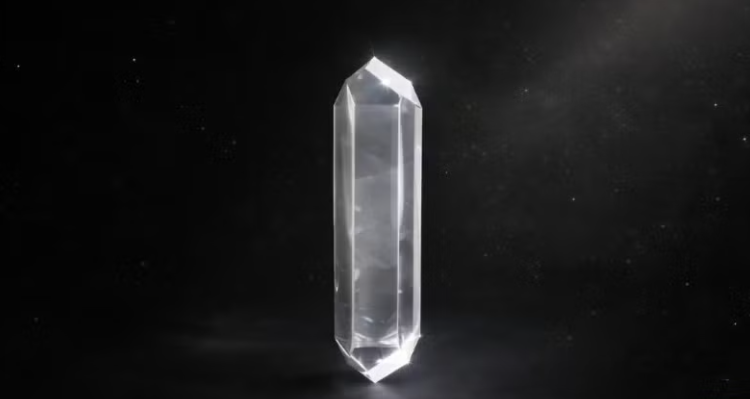
These minerals belong to the rare-earth phosphate group and are part of the Merrillite family, a class of minerals previously found in lunar, Martian, and asteroid samples. What makes these discoveries particularly significant is that neither mineral has an exact equivalent on Earth, highlighting the Moon’s unique geological environment. Their presence offers valuable new evidence for understanding lunar composition, geological evolution, and the Moon’s origin.
Changesite-(Mg), discovered by researchers from the Beijing Research Institute of Uranium Geology, exists primarily as tiny short-column crystals embedded in basaltic rock fragments from Chang’e-5 drill samples. These crystals are extraordinarily small—between roughly 2 and 30 micrometers, often invisible to the naked eye. Researchers described the extraction and identification process as exceptionally difficult, requiring advanced electron microscopy and precision comparable to microsurgery. In one case, only a single ideal crystal measuring 20 micrometers was found for detailed analysis.
Scientifically, Changesite-(Mg) provides important clues about the Moon’s magmatic and geological evolution. Its magnesium-dominant crystal structure helps researchers better understand how lunar magma differentiated and cooled over billions of years, offering insights into both the Moon’s early formation and long-term geological changes.
Changesite-(Ce), meanwhile, was identified by a team from the Chinese Academy of Geological Sciences and is notable for being enriched in light rare-earth elements, particularly cerium. Researchers also found this mineral in both Chang’e-5 samples and a lunar meteorite that landed in China. This contrasts with Apollo mission samples from the United States, which were richer in heavy rare-earth elements. Such differences suggest that light and heavy rare-earth elements were distributed unevenly during the Moon’s internal magmatic evolution, adding an important new dimension to lunar geochemistry.
Beyond academic importance, these discoveries may have long-term practical implications. Rare-earth elements are essential for advanced electronics, renewable energy systems, and strategic technologies on Earth. Understanding how such resources are distributed on the Moon could influence future lunar exploration, in-situ resource utilization, and even potential space-based mining strategies.
Ultimately, the discovery of Changesite-(Mg) and Changesite-(Ce) not only enriches mineralogical science but also strengthens China’s role in planetary research. More importantly, these findings deepen humanity’s understanding of the Moon as both a scientific archive of solar system history and a possible resource frontier for future space exploration.