Improving Laboratory Operational Efficiency: A Practical Imperative for Scientific and Technological Development
In recent years, Vietnam has significantly expanded investment in laboratory infrastructure across critical sectors such as environmental science, biomedicine, food safety, and quality control. Modern analytical instruments, advanced diagnostic systems, and specialized testing equipment are increasingly available in research institutions, universities, and industrial laboratories. However, practical experience shows that purchasing sophisticated equipment alone does not automatically guarantee effective laboratory performance. The true value of a laboratory lies not only in technological modernization, but also in its operational capability, organizational efficiency, and human expertise.
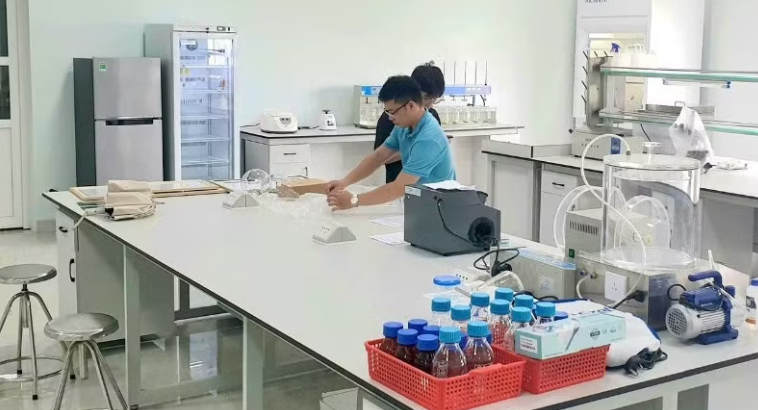
A growing challenge in many laboratories is the gap between technical specifications under ideal conditions and real-world operational effectiveness. Even facilities equipped with state-of-the-art instruments often struggle with maintaining analytical stability, minimizing measurement errors, ensuring reproducibility, and optimizing workflows. These limitations frequently stem from insufficient technical training, weak operational protocols, poor maintenance strategies, or difficulties adapting equipment to diverse sample conditions.
This issue has become increasingly visible through professional exchanges at industry events such as Analytica Hanoi 2026, where discussions extended beyond product showcases to focus heavily on practical laboratory concerns—including sample preparation, interference control, long-term stability, and continuous operation. This shift reflects an important change in mindset: laboratory users are no longer evaluating equipment solely based on technical specifications, but increasingly on its applicability, reliability, and sustainability in real operational environments.
Such developments indicate a broader transformation in laboratory development strategy—from “investing in equipment” to “maximizing operational efficiency.” In this new framework, equipment must be understood as one component of a larger ecosystem that includes workflow design, process standardization, staff competency, technical support, and continuous performance optimization.
A modern laboratory therefore requires a synchronized system built around four core pillars:
1. Technology Selection and Integration:
Choosing the right equipment must align with specific analytical goals, sample characteristics, and operational capacity rather than focusing solely on advanced features.
2. Skilled Human Resources:
Highly trained personnel are essential for calibration, troubleshooting, quality assurance, and data interpretation. Without competent operators, even world-class equipment can underperform.
3. Standardized Procedures:
Consistent protocols for sample handling, maintenance, quality control, and reporting are crucial for minimizing variability and ensuring reliable results.
4. Technical Support and Knowledge Transfer:
Partnerships with equipment manufacturers, domestic technical providers, and scientific experts play an increasingly important role in helping laboratories adapt technology to practical demands.
In Vietnam, several domestic enterprises are beginning to expand beyond equipment distribution into broader roles involving technical consultation, technology transfer, and operational support. This evolution is particularly important because it helps bridge the gap between imported technologies and local implementation realities.
Looking ahead, as analytical requirements become stricter—especially in healthcare diagnostics, environmental monitoring, and food safety assurance—the demand for highly efficient, reliable laboratory systems will only intensify. This requires coordinated progress not only in infrastructure investment, but also in workforce development, technical governance, and ecosystem collaboration.
Ultimately, the future of laboratory development in Vietnam depends on a strategic transition from simply acquiring advanced instruments to truly mastering them. By prioritizing operational excellence, process standardization, and human capability, Vietnam can build a more resilient and sustainable laboratory ecosystem—one capable of supporting national goals in science, innovation, public health, and industrial competitiveness.
Ultimately, the discovery of Changesite-(Mg) and Changesite-(Ce) not only enriches mineralogical science but also strengthens China’s role in planetary research. More importantly, these findings deepen humanity’s understanding of the Moon as both a scientific archive of solar system history and a possible resource frontier for future space exploration.