Awakening the “Alluvial Aroma” on Challenging Land: Cà Mau’s Agricultural Transformation Through Innovation and Ecological Rice
Cà Mau, Vietnam’s southernmost province, has long been defined by its harsh agricultural realities—salinity intrusion, water scarcity, climate volatility, and fragmented small-scale farming. Yet from this difficult terrain, an extraordinary transformation is emerging. What was once considered a disadvantaged rice-growing region is now becoming a symbol of ecological innovation, technological adaptation, and premium agricultural branding. Through science, cooperation, and strategic thinking, Cà Mau is reshaping its rice industry and proving that even saline lands can produce world-class value.
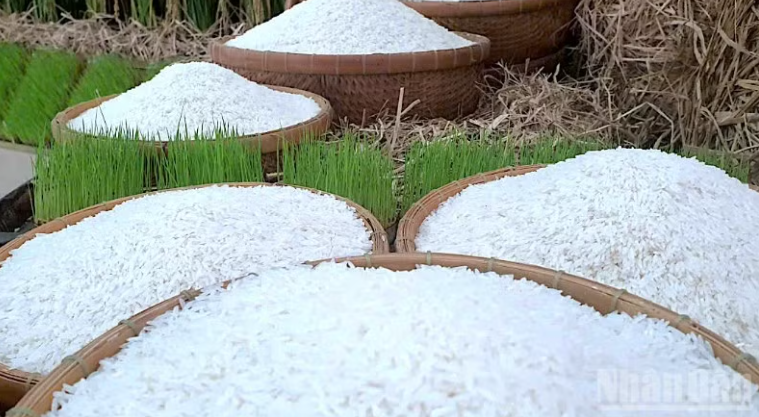
For generations, Cà Mau’s farmers cultivated rice largely at the mercy of nature. Productivity was uncertain, profits were low, and local rice often remained trapped in low-value market segments. However, recent years have witnessed a decisive shift away from fragmented traditional methods toward technologically informed, quality-focused agriculture. This transformation is not merely about increasing yields—it is about fundamentally redefining how rice is produced, valued, and positioned in domestic and international markets.
A compelling example of this shift is the pioneering work of individuals such as Colonel Hoàng Phương Thảo and engineer Tạ Văn Lâm. Despite lacking traditional agricultural backgrounds, they challenged conventional assumptions by introducing organic cultivation models, glucose-reduction rice technology, and liquid crystal organic compounds designed to improve rice quality while protecting environmental integrity. Their efforts initially faced skepticism, as local farmers were hesitant to trust unfamiliar scientific practices. Yet through persistent field demonstrations, technical guidance, and direct engagement with farming communities, they gradually built confidence.
This bold experimentation led to the successful cultivation of ST24 and ST25 premium rice varieties under advanced ecological systems. Farmers who once feared reduced seed density, altered irrigation, or organic treatment methods eventually witnessed dramatic improvements in productivity, product quality, and profitability. Yields reached 700–1,000 kilograms per công, while linked business models enabled export milestones, including shipments to the United States and Japan. Such achievements symbolize more than commercial success—they reflect a profound cultural shift in agricultural thinking.
Equally significant is the expansion of the rice-shrimp integrated farming model, one of Cà Mau’s most promising ecological solutions. By combining rice cultivation with shrimp, crab, and fish production, farmers can diversify income while minimizing chemical inputs. This system aligns closely with global demand for sustainable, low-emission agriculture and demonstrates exceptional climate resilience. Farmers participating in these ecological chains often earn substantially higher annual returns compared to conventional rice monoculture.
However, technological breakthroughs alone are insufficient without structural organization. Cà Mau’s agricultural renaissance increasingly depends on cooperative networks, enterprise partnerships, and scalable value chains. Cooperatives such as Vĩnh Cường, Ba Đình, and Kinh Dớn are actively participating in Vietnam’s 1-million-hectare high-quality, low-emission rice initiative. These organizations provide farmers with financing, technical support, standardized inputs, and guaranteed purchasing contracts, allowing smallholders to integrate into export-grade supply chains.
This collaborative model addresses one of Cà Mau’s historical weaknesses: fragmented production. By consolidating land into larger standardized zones and aligning with international certifications, Cà Mau’s rice sector is moving toward premium segmentation. Rather than competing solely on volume, it is increasingly competing on traceability, sustainability, and product differentiation.
The province’s broader vision extends beyond agriculture into identity creation. Leaders and innovators increasingly emphasize the development of a distinct “Made in Cà Mau” rice brand—one that captures not only product quality but also regional uniqueness. This branding ambition seeks to transform local rice into a cultural and economic ambassador, potentially positioning it as a signature gift product representing Vietnam’s southernmost identity.
Importantly, Cà Mau’s transformation also reflects larger national priorities surrounding green growth, climate adaptation, and technological modernization. The province’s practical application of innovation in farming embodies the spirit of policy directions promoting science-based, sustainable development. Rather than relying solely on academic theory or top-down reform, local pioneers are demonstrating how grassroots technological application can produce measurable economic and ecological results.
In essence, Cà Mau’s journey is not simply an agricultural success story—it is a case study in resilience, reinvention, and strategic modernization. By leveraging ecological systems, scientific experimentation, cooperative organization, and branding, this once-challenging region is turning adversity into advantage.
The awakening of Cà Mau’s “alluvial aroma” is therefore more than the rise of premium rice; it represents the emergence of a sustainable agricultural philosophy where innovation meets identity, and where difficult land becomes fertile ground for global ambition.