Establish monitoring teams to protect the rivers
The river is the lifeblood of the people, inseparable from their lives. Therefore, the health of the river is the most important factor for the community.
Water monitoring community
The Cu De River originates from the Truong Son mountain range, flows through the mountains and forests, and empties into Nam O Bay (Da Nang). It is not only a tourist destination but also plays a crucial role in water supply, ecosystems, and the livelihoods of people in the northwestern part of the city. In particular, in the strategy to ensure water security, the Bac River reservoir upstream of the Cu De River is considered an important "water reserve" for Da Nang, helping to reduce dependence on the Vu Gia River.
However, along with socio-economic development, the Cu De River basin is facing many pressures from production and daily life activities. Farming on sloping land, small-scale livestock farming, deforestation, and uncontrolled wastewater discharge have affected water quality and the ecosystem. Prolonged heatwaves have also caused a decline in upstream water sources, while some unsustainable fishing practices have had negative impacts on the environment.
In response to this situation, the Center for Environmental and Community Research (CECR), in collaboration with local authorities, is implementing the "Community Water Monitoring" model within the framework of the project "Promoting People's Participation in Environmental Protection and Sustainable Water Resource Management in Da Nang, 2024-2027". Notably, the people are not only trained and educated but also directly become an on-site monitoring force.
Locals participate in training as part of the Community River Health Monitoring and Protection program. Photo: LA
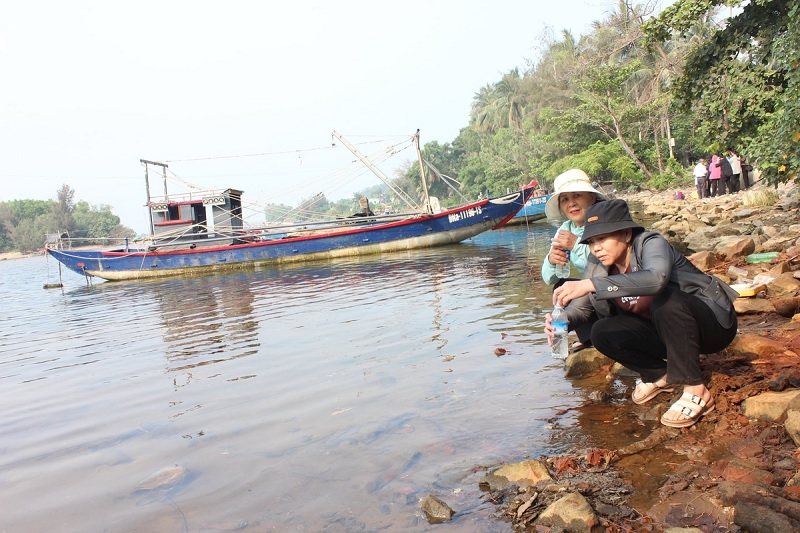
In Ta Lang and Gian Bi villages (Hai Van ward), monitoring teams maintain weekly operations, checking water color, turbidity, aquatic life, wastewater sources, and any actions that may cause pollution. At the same time, they also directly remind residents and tourists to raise their awareness of environmental protection when visiting and swimming in the streams.
Mr. Nguyen Van Trung, Deputy Head of the Fatherland Front Committee of Ta Lang residential area, shared that the river is the lifeblood of the people here, inseparable from their lives. Therefore, the health of the river is the most important factor for the community.
Since participating in the model, the awareness and actions of local people have changed significantly. Many previously harmful practices such as illegal gold mining, the use of toxic chemicals, and electric fishing have been brought under control. People proactively detect, record, and promptly report violations to the authorities.
Mr. Ha Xuan Tau, Deputy Head of the Ta Lang River Protection Monitoring Team, shared that the team currently has 6 members, divided into groups to monitor the upstream area. “We use handheld devices to quickly measure water quality and update data regularly. When we detect any unusual signs, the team will increase the frequency of inspections to address them promptly,” Mr. Tau said.
In addition to monitoring, the teams actively educate the public about not littering and disposing of waste in designated areas. When they see people mining for gold or engaging in activities that affect water sources, the residents immediately report it so that the authorities can take timely action to stop it.
Sustainable water resource management communities
According to the Center for Environmental and Community Research (CECR), one of the outstanding results of the model is the development of a baseline dataset on "river health," including hydrological and hydraulic assessment reports, water quality of the Cu De River, and current habitat status. In addition, maps of flood and landslide risk areas have been completed, providing an important basis for local risk management and response.
Simultaneously, training activities have helped people recognize early signs of changes in water sources, while equipping them with simple yet effective monitoring skills suitable to their specific conditions. More importantly, the model has transformed environmental information from "specialized data" into "tools for the people," enabling communities to be more proactive in protecting water resources and cooperating with the government in resource management.
Ms. Nguyen Ngoc Ly, Chairwoman of the CECR Center Management Board, stated that the project was implemented to promote genuine community participation in environmental protection and sustainable water resource management in Da Nang. After implementation in seven villages and residential areas along the Yen, Tuy Loan, and Cu De river basins (in Ba Na, Hoa Vang, Hoa Tien communes and Hai Van ward), the model has clearly demonstrated the leading role of the people in protecting the environment and water resources in accordance with the law.
The project not only raised awareness but also brought about changes in action. Through training and expert guidance, people gained a better understanding of the role of indicator species such as catfish and stream snails, leading to the formation of monitoring groups and the practice of sustainable fisheries exploitation, limiting destructive practices.
In the field of waste management, the project also marks a new step forward with the application of digital technology to monitor household waste. Recording waste data, especially recyclable waste, not only helps to ensure transparency but also encourages people to participate more actively in waste sorting at source. This improves the connection between residents, collection units, and scrap metal purchasing groups, gradually forming a sustainable waste management chain within the community.
From the practical experience of community-based water resource monitoring groups, it is clear that water resource protection cannot rely solely on management agencies, but must begin with the community itself. When people become active participants in monitoring and action, each river will have an additional, sustainable "shield." This is not only a short-term solution, but also a fundamental approach to ensuring water security in the context of increasing urbanization and climate change.
“The implementation of the ‘river health’ monitoring model helps people access simple yet effective methods for monitoring water quality. From measuring pH and turbidity to regular record-keeping, communities can proactively detect signs of pollution and respond promptly,” said Ms. Nguyen Ngoc Ly, Chairwoman of the CECR Management Board.
https://nongnghiepmoitruong.vn/