Prime Minister Lê Minh Hưng: Boldly propose breakthrough mechanisms to attract resources for transport infrastructure
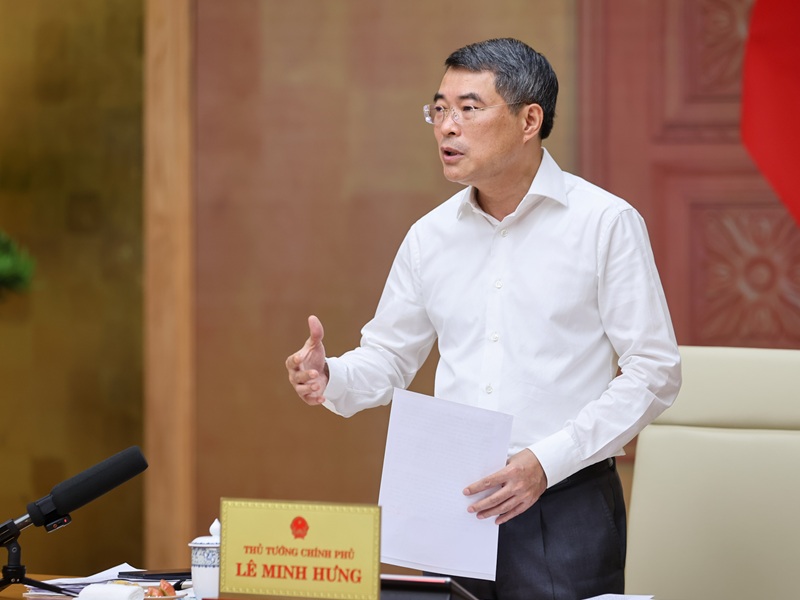
On the afternoon of April 29, Prime Minister Lê Minh Hưng chaired a meeting on the implementation of tasks from the beginning of 2026 to the present, and the key directions and tasks for the coming period of the Ministry of Construction.
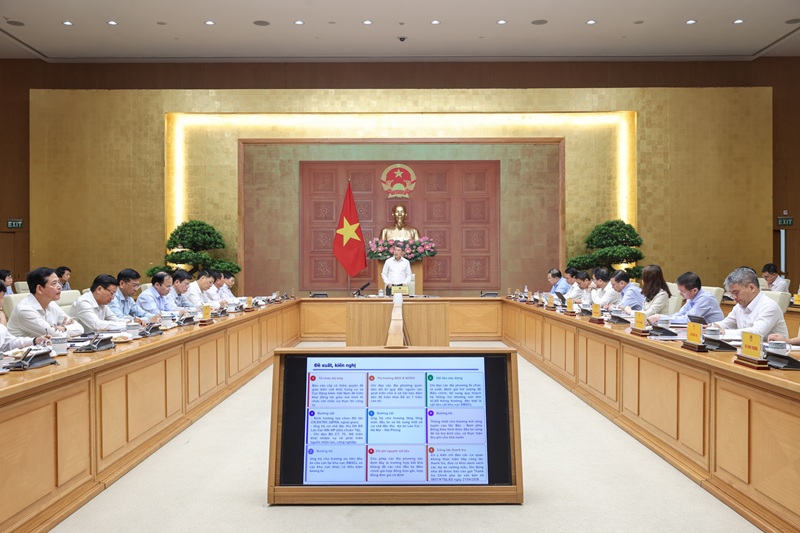
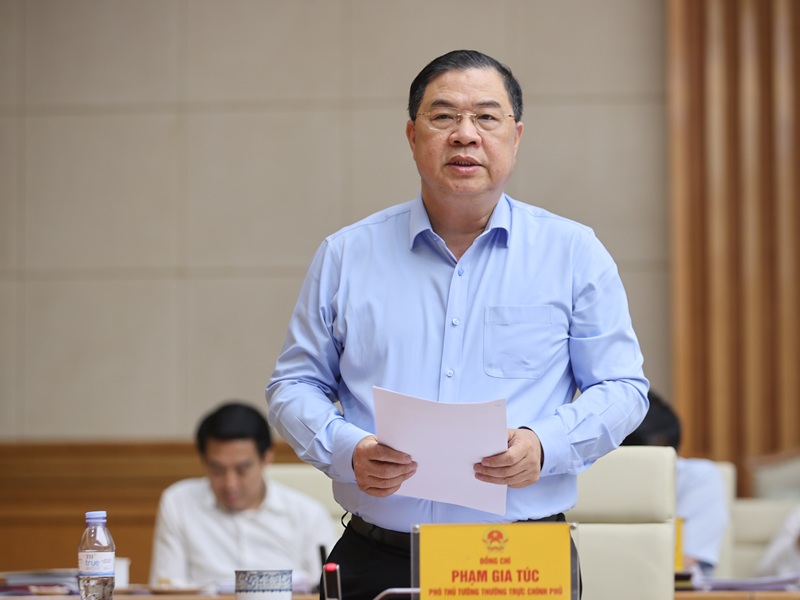
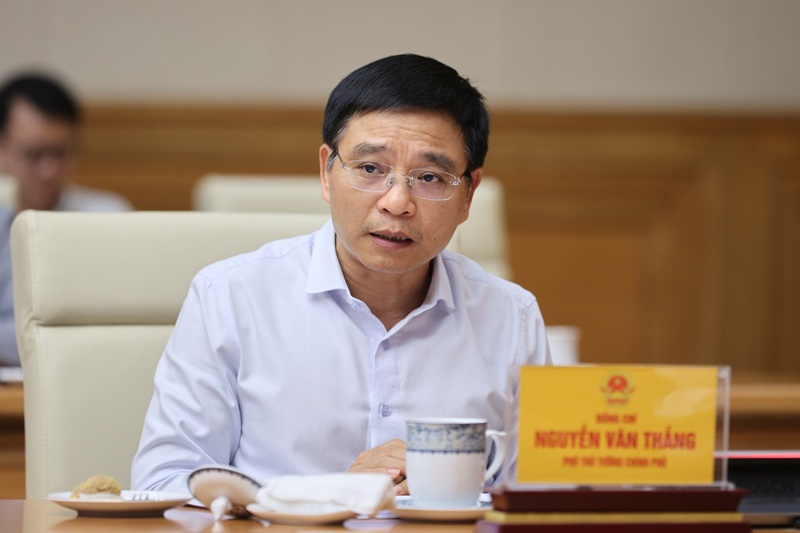
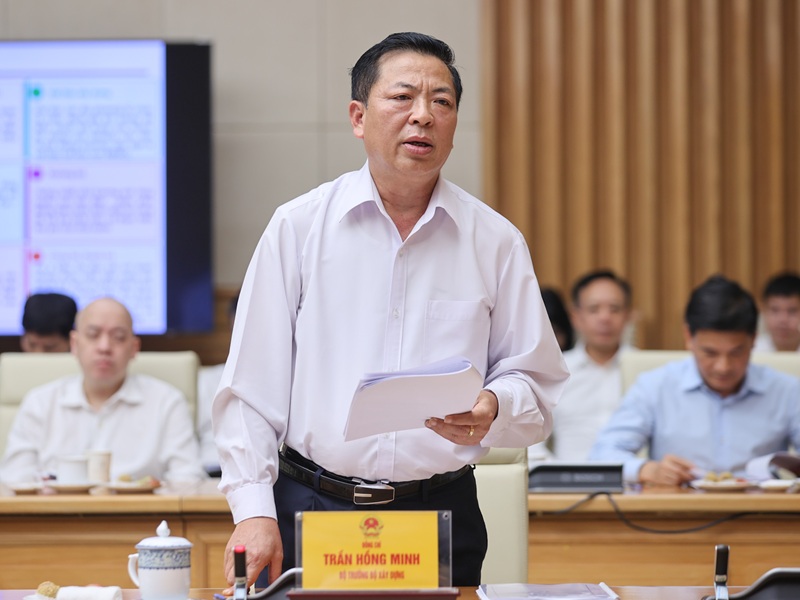
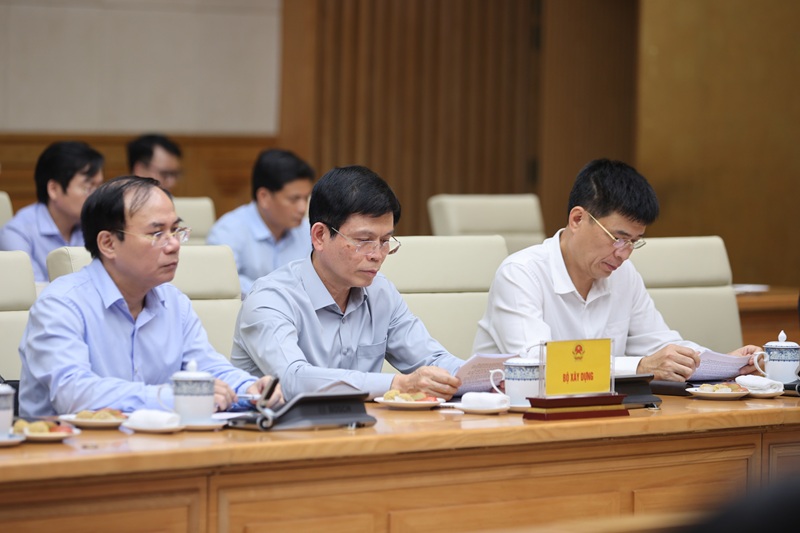
Attending the meeting were Permanent Deputy Prime Minister Phạm Gia Túc, Deputy Prime Minister Nguyễn Văn Thắng, Minister of Construction Trần Hồng Minh, Minister and Chairman of the Government Office Đặng Xuân Phong, along with leaders of ministries and agencies.
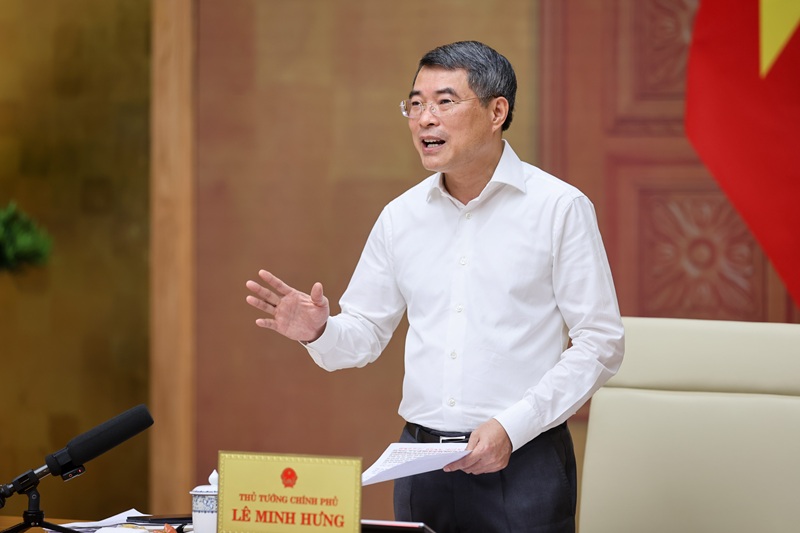
After listening to reports and opinions, in his concluding remarks, Prime Minister Lê Minh Hưng acknowledged and highly appreciated the Ministry of Construction for its unity, determination, and efforts in implementing assigned tasks with a large workload, high requirements, and time pressure, achieving many important results, especially in developing transport infrastructure, managing planning, urban development, and contributing positively to the country’s development achievements in recent times.
Besides the achieved results, the Prime Minister pointed out that with very high development requirements and a rapidly evolving situation with many new challenges, the Ministry needs to clearly recognize existing shortcomings and limitations.
Accordingly, the legal system in the construction sector still has overlaps; although administrative reform, reduction of procedures and compliance costs for people and businesses have been actively implemented, the number of administrative procedures remains high.
The quality of planning management, exploitation, and use of new development spaces remains limited; bottlenecks such as traffic congestion, flooding, and environmental pollution persist in major cities; the real estate market shows an imbalance between supply and demand, with an unbalanced product structure. The development of science and technology, digital transformation, green transformation, and the application of databases in management have not yet met requirements.
The development of transport infrastructure has mainly relied on public investment, with limited mobilization of social resources; preparation for public investment projects remains inadequate; and there is a lack of synchronized connectivity among different modes of transport.
The system of standards, technical regulations, and construction cost norms is still incomplete; some regulations on investment cost management are not truly suitable for projects with complex technologies, high-tech requirements, and those implemented for the first time in Vietnam. High-quality human resources remain insufficient.
The Prime Minister stated that the Resolution of the 14th National Party Congress and Conclusion No. 18-KL/TW of the 2nd Plenum of the Central Committee set out very clear requirements for the construction sector: developing a synchronized and modern infrastructure system; promoting urbanization and urban development, regional linkage, with specific targets including: (i) average growth of the industry–construction sector at 12.3%; (ii) by 2030, putting into operation over 5,000 km of expressways; (iii) completing an additional 645 km of railway, including 200 km of urban railway; and especially ensuring the goal of double-digit sustainable growth for the 2026–2030 period amid many current difficulties and challenges.
Regarding major orientations, the Prime Minister requested thorough research and urgent completion and issuance of the Ministry’s Program and Plan to implement the Resolution of the 14th National Party Congress, Conclusion No. 18-KL/TW, and the Government’s Action Program, translating them into task groups across sectors, updating and supplementing the Ministry of Construction’s action plan, assigning responsibilities to affiliated agencies and units with specific targets and timelines; at the same time, assigning Ministry leaders to directly monitor and provide regular, continuous direction to ensure progress, quality, and effectiveness.
Focus on building a clean and strong Party organization within the agency; urgently review, finalize, and issue working regulations, clearly defining and enhancing the exemplary responsibility of the head; implement evaluation and classification of collectives and officials in accordance with Regulation No. 336-QĐ/TW.
Urgently complete guidance on allocating capital to projects based on output results, linked with socio-economic accounting and evaluation of investment efficiency as prescribed. Review and decide within authority or submit to competent authorities for consideration and decision on adjusting sectoral and field planning to align with the national master plan and newly approved regional plans.
Continue implementing directives of the Secretariat and the Government Party Committee on strengthening leadership and direction in implementing major and key projects launched simultaneously to celebrate major holidays in 2025; accordingly, the Ministry needs to focus on reviewing and assessing project implementation to coordinate with ministries and managing agencies in urging implementation to ensure progress, quality, safety, and evaluation of investment efficiency.
The Ministry of Construction needs to take the lead in disbursing public investment capital
Pointing out several specific and key tasks, the Prime Minister requested first to create strong breakthroughs in institutions, promptly removing bottlenecks and unlocking resources for development.
Accordingly, focus on completing draft laws to be submitted at the 2nd session of the 16th National Assembly, especially the revised Housing Law and the revised Real Estate Business Law; urgently review and propose amendments to decrees on functions and tasks to ensure clear delineation of authority; urgently draft, appraise, and submit to the Government for issuance 20 decrees and promulgate, within its authority, 62 circulars ensuring quality and progress under the 2026 work program.
Focus on substantially reducing administrative procedures, business conditions, compliance costs, and processing time; promote decentralization and delegation of authority associated with strengthening inspection, supervision, and improving the effectiveness and efficiency of state management. Participate in developing a Central Resolution on the country’s development model in the new period and build growth scenarios to report to competent authorities. Promote the completion of databases and foster science and technology, innovation, and digital transformation.
Regarding planning management, urban development, housing development, and the real estate market, the Prime Minister requested effective, high-quality, and timely implementation of the contents and requirements under Conclusion No. 224-KL/TW dated December 8, 2025 of the Politburo, including urgently reviewing and comprehensively adjusting the national urban and rural system planning to optimize the arrangement of development space in line with the two-tier local government model. Manage planning and urban development synchronously according to a scientific and modern system of urban classification criteria and standards, ensuring that by 2030 the urbanization rate exceeds 50%.
Focus on developing social housing and reasonably priced commercial housing; reasonably control segments; the Ministry of Construction shall act as the focal coordinator, continue reviewing and thoroughly resolving legal difficulties and obstacles, backlogged projects, unlocking land and investment capital resources; complete the target of building 1 million social housing units before 2030, review and reduce administrative procedures, lower compliance costs for investors, and ensure proper eligibility of buyers.
Urgently review and focus on researching and developing standards and technical regulations in the management field; complete the system of construction norms and prices, proactively guide localities within authority; continue reviewing arising obstacles related to materials of projects for timely handling; require localities to commit and take responsibility for construction material sources for public investment projects, resolutely cutting capital if materials are not ensured.
Regarding investment in transport infrastructure development, in the context that total social investment capital is about 38 quadrillion VND for the entire term while public investment accounts for only about 20–22%, and economic growth targets are very high, the Prime Minister particularly emphasized that the Ministry of Construction and the Ministry of Finance need to study and boldly propose breakthrough mechanisms to attract social resources both domestically and internationally for infrastructure investment, especially transport, such as studying plans to issue government bonds for projects to be held by foreign investors and organizations with long maturities from 15 to 30 years.
The Prime Minister clearly stated that the Ministry of Construction needs to take the lead in disbursing public investment capital; at the same time, during the implementation of transport infrastructure projects, it is necessary to carefully evaluate efficiency before, during, and after investment, ensuring quality, progress, and prevention of corruption and waste, not neglecting processes, technical standards, quality, and project effectiveness due to schedule pressure.
The Prime Minister requested focusing resources on investing in expressway routes, continuing to direct and coordinate with localities to focus on implementing 18 ongoing projects with a total length of 1,252 km. Focus on directing and having specific plans to implement railway projects such as the North–South high-speed railway project, Lào Cai - Hà Nội - Hải Phòng, Hà Nội – Đồng Đăng, railway lines in Hà Nội and Ho Chi Minh City; focus on completing and not delaying progress, putting into operation Long Thành Airport, Gia Bình Airport, and other airport projects; seaport and inland waterway projects.
Regarding transport management and transport services, the Prime Minister emphasized the need to prioritize issuing solutions to reduce logistics costs, which remain high relative to GDP, thereby enhancing competitiveness.
Affirming that the Government, the Prime Minister, and ministries will accompany the construction sector, the Prime Minister expressed his expectation that the Ministry of Construction will show greater determination to complete assigned tasks, especially key national projects.
https://baochinhphu.vn/thu-tuong-le-minh-hung-manh-dan-de-xuat-co-che-dot-pha-thu-hut-nguon-luc-cho-ha-tang-giao-thong-102260429181030455.htm