Raw Material Autonomy – The “Core Link” Behind Stable Export Quality
In Vietnam’s journey to bring products to the global market, quality isn’t just defined by advanced production technology or skilled labor. It starts at the most fundamental level: raw materials. When businesses secure control over their input materials, quality management becomes seamless and consistent, giving them a competitive edge in meeting increasingly strict international standards—especially in food, textiles, and wood processing.
Raw Materials: The Starting Point of Quality
In manufacturing, raw materials are the very first factor shaping the final product. No matter how modern the process or how advanced the equipment, unstable inputs make it nearly impossible to maintain uniform outputs.
Even a small change in suppliers or batches can alter color, durability, taste, or technical specifications—differences that can jeopardize compliance with export standards. That’s why modern quality management systems treat raw material control as a critical checkpoint. Managing quality “from the root” not only minimizes production errors but also ensures long-term product stability.
Yet many Vietnamese enterprises remain heavily dependent on external suppliers. This reliance exposes them to risks from price volatility, transport disruptions, or shifting supplier standards. In today’s unpredictable global market, such dependence is increasingly unsustainable.
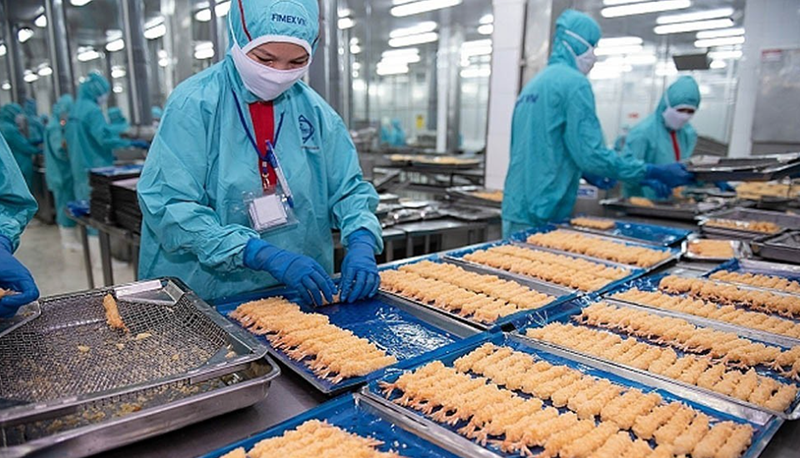
Food industry: controlling raw materials to ensure product quality and safety.
Food, Textiles, and Wood: Different Pressures, Same Challenge
- Food industry: Raw materials directly affect not just product quality but consumer health. Import markets now demand strict traceability, hygiene standards, and transparency. To meet these requirements, many companies are building stable raw material zones or partnering with farmers under safe production standards. This proactive approach reduces risks and makes compliance with global traceability rules far easier.
- Textile industry: Most inputs—cotton, yarn, fabric—are still imported. This dependence leaves supply chains vulnerable to global price swings and logistics disruptions. Some firms have had to adjust production schedules simply because raw material shipments were delayed. As a result, domestic sourcing and supply diversification are becoming strategic priorities, helping reduce costs and ensure product consistency—critical for international fashion brands with strict quality demands.
- Wood processing industry: Here, raw materials are tied to legality and sustainability. Major markets like the EU and US require proof of legal timber origin and encourage sustainable forestry. Enterprises that secure raw material zones or partner closely with forest growers not only reduce legal risks but also strengthen their reputation abroad. Stable sourcing also ensures more consistent wood quality, minimizing variations in moisture or material properties across batches.
Raw Material Autonomy: A Strategic Path for Export Growth
Across industries, the raw material challenge is the same: it directly impacts quality and compliance with international standards. By taking control of supply, businesses reduce risks, stabilize production, and strengthen competitiveness.
Autonomy means less exposure to external shocks—whether price fluctuations or logistics breakdowns. More importantly, it enables quality control at the source, rather than scrambling to fix issues at the final stage. It also enhances traceability, now a mandatory requirement in many export markets. With better supply chain transparency, products meet not only technical standards but also sustainability and accountability expectations.
In the long run, raw material autonomy is more than a technical fix—it’s a strategic move. It builds resilience, credibility, and a solid foundation for expanding into demanding global markets. When quality begins at the raw material stage, Vietnamese enterprises gain a decisive advantage in controlling the entire value chain. That autonomy doesn’t just stabilize production—it elevates Vietnam’s position in the international marketplace, where consistency, transparency, and sustainability are the new benchmarks of success.
https://vietq.vn (tnttrang)