Dong Thap province is developing a digital map of raw material areas and a system for tracing the origin of agricultural products.
In an effort to digitally transform the agricultural sector, Dong Thap province aims to build a digital map of raw material areas and promote traceability of key agricultural products.
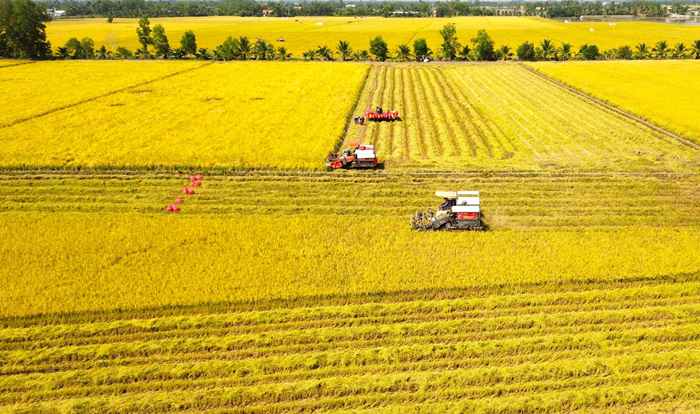
Dong Thap aims to build a digital map of raw material areas (Illustrative image).
Thanks to the focused implementation of various solutions, the province's Agricultural Restructuring Project has been strongly implemented, gradually transforming from inefficient rice production to the development of fruit trees, aquaculture, and ornamental plants – sectors with high economic value. To date, Dong Thap has formed large-scale concentrated production areas for products such as mangoes, ornamental plants, durian, pineapples, dragon fruit, and catfish…
Recognizing agriculture as a crucial foundation, the province will focus on comprehensively restructuring the agricultural sector in the coming period, ensuring the maximum value of products through high-tech content and a circular production and processing chain. This includes implementing the project "Building Dong Thap Province as a pioneer in ecological agriculture, modern rural areas, and civilized farmers." The province will also reorganize the development space of each ecological zone, closely linking it with the market, processing industry, and improving the corresponding technical infrastructure.
However, according to the Provincial People's Committee's assessment, data on the province's agricultural raw material areas is currently still scattered across many agencies and units; information on soil, water resources, production planning, seasons, yield, planting area codes, etc., has not yet been integrated on a unified digital data platform.
Current traceability systems are primarily focused at the product or production facility level, lacking strong integration with spatial data of the raw material area and failing to fully reflect the linkages in the agricultural value chain from production - harvesting - processing - distribution. Furthermore, domestic and international market demands for agricultural products are increasingly stringent, particularly regarding regulations on information transparency, traceability, planting area codes, and quality control throughout the supply chain.
Therefore, building a comprehensive digital data system on raw material areas, capable of connecting with traceability systems and other digital platforms, is essential. Developing a digital map of raw material areas in Dong Thap province, integrating soil data, water resources, planting area codes, cropping patterns, and implementing an electronic traceability system for the province's key agricultural products, will create a unified digital agricultural data platform.
The system not only effectively supports state management but also helps businesses, cooperatives, and people improve production capacity, ensure product information transparency, and enhance connectivity with e-commerce and logistics, thereby contributing to increasing the value and competitiveness of Dong Thap agricultural products in the market.
Dong Thap province aims to build a digital map of agricultural raw material areas, integrating data from the commune to the provincial level; and simultaneously connecting and sharing data with the province's shared data warehouse and specialized information systems to serve the management, planning, and development of agricultural production. The goal is to develop a process for managing, operating, updating, and sharing digital agricultural data, ensuring that data is maintained according to the principles of "accuracy - completeness - cleanliness - viability"; and to organize training for managers, cooperatives, businesses, and producers on exploiting, using, and updating data on the system.
The electronic traceability system meets the following criteria: 60-70% of the growing/farming areas for the province's key agricultural products are digitized and updated on the digital map of raw material areas. Each key agricultural product in the province has at least one product with an electronic traceability system, ensuring connection with the national traceability system. Over 60% of cooperatives, enterprises, and production and business establishments dealing in key agricultural products participate in updating and utilizing data on the digital agriculture platform. The time and cost of verifying the origin of agricultural products for state management, quality control, and commercial transactions are reduced by at least 30%.
Developing a digital map of key agricultural raw material areas and traceability systems is one of the major tasks on the list of commissioned scientific and technological tasks and innovation projects, focusing on the development of strategic technologies and strategic technological products. The Provincial People's Committee is committed to receiving, managing, and utilizing the research results to serve the management and planning of smart agriculture and to integrate the connection of agricultural households, contributing to strengthening the application of technology for sustainable agricultural development.
https://thiennhienmoitruong.vn
https://thiennhienmoitruong.vn