Hung Yen: Stepping up the implementation of waste treatment projects using modern technology.
Hung Yen province is focusing on building modern waste treatment complexes using waste-to-energy incineration technology, with sufficiently large areas to ensure the treatment of various types of waste.
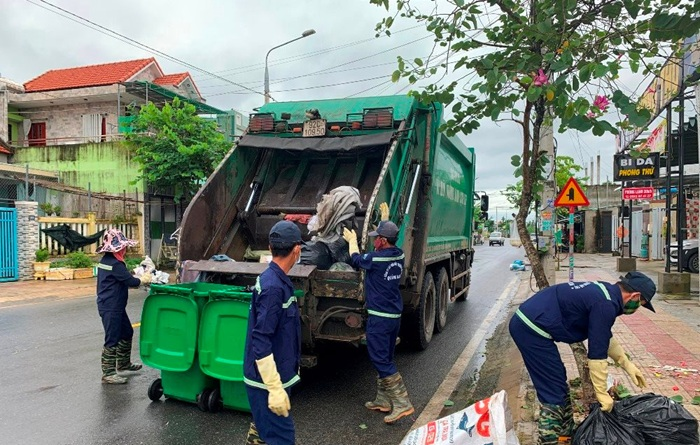
According to a report by the Hung Yen Department of Agriculture and Environment, the total volume of household waste generated in the province is approximately 2,000 tons/day; about 1,909.4 tons/day (95.5%) is collected and transported. It is estimated that about 570 tons/day (29.98%) of waste is processed at centralized waste treatment facilities.
Specifically: Di Su Waste Treatment Area 48 tons/day, Dai Dong Waste Treatment Area 192 tons/day, Quynh Phu Waste Treatment Area (Thanh Dat Quynh Coi Company) 50 tons/day and Hoa Binh High-Tech Joint Stock Company 160 tons/day; the remaining waste is processed at scattered waste treatment areas (households, some small-scale incinerators in 43 communes and landfills, composting pits, and collection points).
Currently, the province has 461 landfill sites containing accumulated waste, with a volume of 1,681,482 tons. The current capacity of centralized waste treatment facilities in the province is insufficient to handle the entire daily waste volume. Meanwhile, most of the collection points, composting pits, and landfills at the commune and village levels are overloaded; small incinerators at the commune level are malfunctioning and dilapidated.
Given the above situation, the provincial People's Committee leadership has assigned the Department of Agriculture and Environment to accurately review the total amount of waste generated in the province at the present time; to coordinate research and assessment, and forecast population size until 2030, 2045, and 2050 as a basis for calculating the amount of waste generated in each period, thereby developing the scale and investment roadmap for waste treatment plants.
This locality will focus on planning only 3-5 locations for waste treatment plant investments, avoiding scattered investments and strategically locating them in the northern, central, and southern areas of the province. Specifically, the locations for waste treatment plants will be zoned based on clearly defined areas and the volume of waste generated in each region; simultaneously, a map zoning these waste treatment projects will be urgently developed and integrated into the province's overall planning.
The Department of Finance is reviewing waste treatment projects in the area. For projects that have not yet received investment approval, the Department will guide investors to other sectors; for projects that have received investment approval but are progressing slowly or are small-scale, the Department will encourage investors to cooperate with the province by shifting to other sectors.
The province is focusing on building modern waste treatment complexes using waste-to-energy incineration technology, with a sufficiently large area to handle various types of waste, including: household solid waste, industrial waste, construction waste, sludge, etc. To accomplish this, the Provincial People's Committee has assigned the Department of Agriculture and Environment to lead and coordinate with other departments and agencies to finalize investment plans for waste treatment plant projects. These plans should be submitted to the Provincial People's Committee in May 2026 for consideration, decision, and implementation, ensuring efficient handling of daily waste generation and the complete treatment of all accumulated waste by the end of 2027.
Another important task being actively implemented by the province is completing the synchronized technical infrastructure for sorting, collecting, transporting, recycling, and treating sorted household solid waste. Specifically, the Department of Finance, in coordination with the People's Committees of communes and wards, will compile a list of investment projects for technical infrastructure related to waste sorting, collection, transportation, and treatment into the medium-term public investment plan for the period 2026-2030, report to the competent authorities for approval, and allocate funds for implementation.
Review, compile a list, and invest in equipment and facilities for sorting, collecting, transporting, and processing sorted waste in accordance with local government regulations on waste sorting. Promote investment in centralized waste treatment projects in the province, prioritizing the use of modern, environmentally friendly technologies, waste treatment combined with energy recovery, and limiting direct landfilling of waste; inspect and address slow-progressing centralized waste treatment projects.
This locality is promoting the development of the recycling industry, making maximum use of existing equipment, technical infrastructure, and production facilities to participate in recycling, processing, and co-processing of waste, ensuring efficiency and avoiding waste. Research is being conducted on building, operating, connecting, and sharing databases on waste management in the area;
Promote the application of Fourth Industrial Revolution technologies such as Artificial Intelligence (AI), the Internet of Things (IoT), and Big Data in the management, monitoring, and operation of waste collection and treatment systems; apply a smart waste management system based on digital data to track, evaluate, and improve the efficiency of waste sorting, collection, transportation, recycling, and treatment. Review and develop plans and solutions for addressing accumulated waste, unsanitary landfills, and areas of environmental pollution caused by waste in the locality.
https://thiennhienmoitruong.vn
https://thiennhienmoitruong.vn