Scientific infrastructure, innovation, and digital transformation need to be one step ahead
Science and technology (S&T), innovation, and digital transformation are considered key factors driving breakthroughs for Can Tho City in the new era. To effectively leverage this, Can Tho has prioritized investment in and implementation of a synchronized, modern, and seamless infrastructure for S&T, innovation, and digital transformation. This will promote the development of various sectors, contributing to increased labor productivity and competitiveness, and driving rapid and sustainable economic growth for the city.
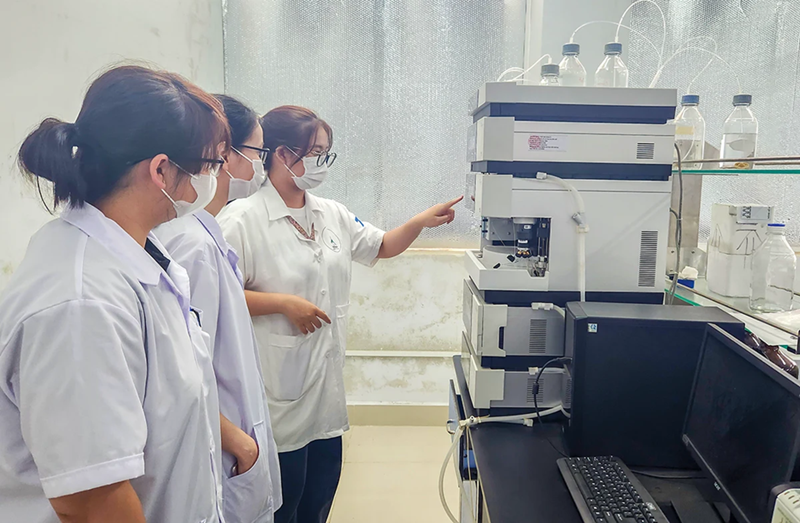
Scientific and technological research activities at the Can Tho Center for Application of Advanced Science and Technology.
Active and effective
According to Mr. Nguyen Huu Thanh Binh, Deputy Director of the Department of Science and Technology of Can Tho City, in recent years, the infrastructure for science and technology, innovation, and digital transformation has received significant investment and expansion, gradually becoming more synchronized to meet the needs of management, administration, and service to citizens and businesses. The city's data center, integrated data sharing platforms (LGSP), open data portal, and electronic administrative procedure processing system have been effectively implemented, contributing to enhancing the capacity of digital government. Furthermore, the work of ensuring information security and data confidentiality for information systems and databases has been closely and seriously implemented.
Can Tho City currently has 113 organizations engaged in science and technology activities, including 69 public and 44 non-public organizations. These organizations are actively and effectively involved in research, application, technology transfer, science and technology services, and innovation. The city has updated and finalized the proposal for establishing a High-Tech Park, submitting it to the Prime Minister for consideration and decision. In addition, the city is also providing support for resettlement, land acquisition, and the development of infrastructure investment projects to implement the Can Tho City Concentrated Information Technology Park project.
The project to develop Can Tho City into a smart city in the period 2021-2025, with a vision to 2030, approved by the City People's Committee in Decision No. 1652/QD-UBND, outlines 32 priority tasks and projects to be implemented in two phases across 10 key areas. To date, 12 tasks have been completed, 8 are underway, and 12 have not yet been started. The city is continuing to research and refine the implementation plan for Can Tho City's smart city, ensuring it aligns with practical conditions and is integrated with planning and infrastructure.
Regarding digital infrastructure, the city's data center is built on a cloud computing model, managing over 50 information systems with more than 300 virtual servers; the video conferencing system and dedicated data transmission network of Party and State agencies operate seamlessly from the central level to the commune level. Currently, Can Tho has published more than 540 open datasets for exploitation, analysis, and creation of new value. The city's administrative procedures information system has been deployed synchronously; it has completed the connection with the National Public Service Portal, ensuring the system operates smoothly.
Integrated and flexible investment
Besides the achievements, investment in and upgrading of information technology equipment at some grassroots-level agencies and units is still slow; the digitization of data, records, and results of administrative procedures at departments, agencies, and localities has not met practical requirements; and data sharing between ministries and localities faces many difficulties. Furthermore, the concentrated Information Technology Park is being implemented slowly and has not yet attracted digital technology businesses to invest…
Mr. Nguyen Huu Thanh Binh added: To complete the infrastructure for science and technology, innovation, and digital transformation, the city continues to implement projects such as the Concentrated Information Technology Park and the Can Tho High-Tech Park; and to develop and implement projects applying IoT in several sectors and fields such as manufacturing, trade, energy management, smart agriculture, smart transportation, and smart healthcare... At the same time, it will form and develop a startup and innovation center, a regional research and development center with satellite centers in the former provinces of Soc Trang and Hau Giang.
Many believe that, given its current position, Can Tho City has the capacity to establish a data center and cloud computing infrastructure that meets international standards. However, according to Mr. Truong Trung Trang, a specialist in the Cloud Computing Business Unit of MobiFone Telecommunications Corporation, to achieve this, Can Tho needs to implement a comprehensive set of policies encompassing planning, infrastructure, energy, investment incentives, human resources, and international cooperation. These policies aim to create an attractive, stable, and transparent investment environment, combining hard infrastructure (electricity, telecommunications, transportation, land) with soft infrastructure (policies, human resources, international cooperation). When implemented comprehensively, Can Tho will become the data and computing center of the Mekong Delta region, serving as a foundation for the development of digital government, digital economy, and digital society in the 2026-2035 period.
According to Mr. Nguyen Phuong Tuan, Vice Chairman of the National Assembly's Committee on Science, Technology and Environment, regarding data and technology infrastructure, Can Tho City needs to focus on building and sharing an urban data platform – open data for research and development to serve the testing of smart cities, smart transportation, and smart agriculture. In particular, clear regulations on usage rights, security, and legal responsibilities are necessary. In addition, Can Tho could research and implement several sandboxes such as smart agriculture through testing humidity sensors, AI pest and disease forecasting, and a supply chain management platform for cooperatives; smart ports and multimodal logistics integrating IoT and blockchain for goods traceability and optimizing cargo flow at Can Tho port; digital markets for small and medium-sized enterprises; and smart tourism applying e-commerce platforms focused on Mekong Delta products (OCOP, agricultural products), integrating digital payments and logistics…