Groundbreaking Medical Milestone: Lab-Created Human Sperm Offers Hope for Men with
In a breakthrough that could reshape reproductive medicine, U.S. biotech startup Paterna Biosciences has successfully cultured human sperm in a laboratory for the first time—opening new possibilities for millions of men suffering from infertility.
The Scale of the Challenge
Globally, an estimated 250 million men face infertility issues, with symptoms ranging from low sperm count to poor motility and quality. Alarmingly, 10–15% of these cases involve azoospermia—a complete absence of sperm in semen. Despite advances in IVF, nearly half of failed cases stem from male factors, yet the FDA has not approved any definitive treatment for male infertility.
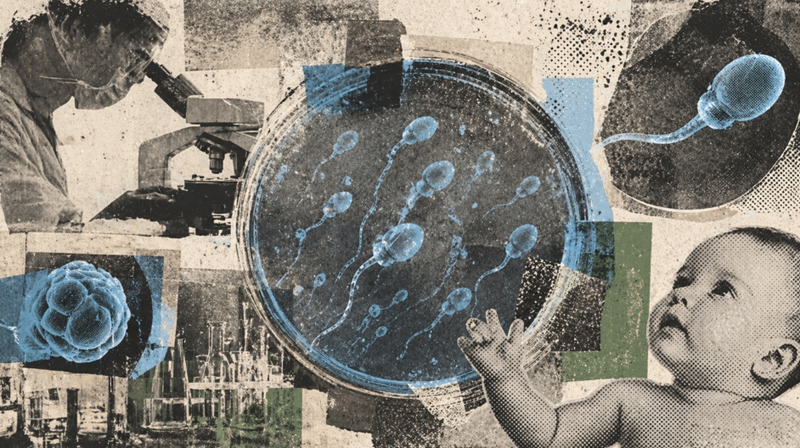
The Breakthrough: Lab-Cultured Sperm
Paterna’s innovation leverages spermatogonial stem cells, primitive reproductive cells that may remain in the testes even when sperm production ceases. By differentiating these cells in vitro, researchers created sperm-like cells capable of fertilization.
In early trials, these lab-grown cells successfully fertilized eggs via IVF, producing normal early-stage embryos. While clinical pregnancy trials have not yet begun, experts hail this as a historic leap in reproductive science.
How It Works
- Stem cells are extracted from testicular tissue.
- Cultured cells undergo meiosis in lab conditions, producing gametes with 23 chromosomes.
- Using single-cell genomics and computational biology, researchers replicated the microenvironment needed for sperm maturation.
- Optimized molecular combinations enabled sperm-like cells to reach functional maturity.
Professor Alexander Pastuszak of the University of Utah, Paterna’s co-founder, emphasized that success lies not only in stem cells but in repairing their surrounding microenvironment. The long-term goal: generate thousands of healthy sperm from a single biopsy sample.
Implications for Patients
This breakthrough could transform treatment for:
- Men with complete azoospermia, enabling biological parenthood.
- Young cancer patients undergoing chemotherapy, preserving fertility before puberty.
- Couples facing repeated IVF failures due to male factors.
Compared to current treatments—hormone injections, surgical extraction, or direct sperm injection—lab-cultured sperm offers a more reliable and less invasive path.
From Mice to Humans: A Long Journey
The milestone builds on earlier success in 2011, when Japanese scientist Takehiko Ogawa created mouse sperm in vitro. Previous attempts by companies like France’s Kallistem failed to replicate results in humans. Paterna’s achievement marks the first credible step toward clinical application.
What’s Next
Backed by $6 million in funding from Springtide Ventures and e184, Paterna plans large-scale clinical trials later this year. These will compare natural and lab-grown sperm directly. Pending ethical, genetic, and safety approvals, the service could launch by 2027, with costs projected between $5,000–$12,000.
If successful, this would usher in a new era of reproductive medicine—where lab-created sperm could redefine possibilities for male infertility treatment worldwide.
https://genk.vn/ (tnttrang)