VKIST and the Strategic Evolution of Vietnam–South Korea Scientific Cooperation: From Institutional Partnership to Innovation Architecture
The advancement of the Vietnam–Korea Institute of Science and Technology (VKIST) into a symbolic and policy-pioneering institution reflects a broader transformation in Vietnam’s approach to science, technology, and innovation governance. Rather than treating international scientific cooperation as isolated technical assistance, Vietnam and South Korea are increasingly framing collaboration as a strategic mechanism for institutional experimentation, ecosystem building, and long-term technological sovereignty. The recent Vietnam–Korea Science, Technology, and Innovation Forum demonstrates this shift clearly: VKIST is no longer envisioned merely as a bilateral research project, but as a model institution capable of testing breakthrough policies and shaping the architecture of Vietnam’s future innovation economy.
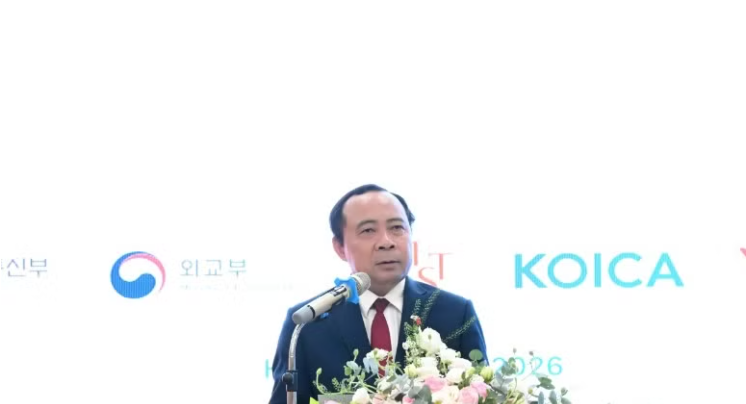
At the heart of this development is a significant strategic convergence. Both Vietnam and South Korea recognize science, technology, innovation, and digital transformation as central pillars of national competitiveness. South Korea’s historical experience—transforming from a developing economy into a global technology leader through state-led industrial policy, strong research institutions, and business-linked innovation—offers Vietnam a particularly relevant reference model. Unlike generic international cooperation, the Vietnam–Korea partnership is grounded in structural similarity: both nations have emphasized education, industrial upgrading, and technological modernization as pathways to economic resilience.
VKIST thus represents more than a research institute; it functions as an institutional bridge for transferring not only scientific expertise, but also governance methodologies. The emphasis on using VKIST as a pilot site for “breakthrough science and technology policies” is especially important. Vietnam’s innovation challenges are not solely technological—they are deeply institutional, involving regulatory bottlenecks, fragmented commercialization systems, and limited policy experimentation capacity. By positioning VKIST as a sandbox for policy reform, Vietnam is effectively using international cooperation to test domestic governance modernization. This mirrors how successful innovation economies often rely on designated experimental institutions to pioneer reforms before national scaling.
The involvement of Korea’s KIST in strategic planning and policy design further strengthens this model. Rather than simply offering equipment or project funding, South Korea is contributing institutional DNA—its accumulated experience in linking research to industrial productivity, commercialization, and strategic technology development. This is crucial because one of Vietnam’s persistent weaknesses has been the disconnect between research capability and product commercialization. The forum’s repeated emphasis on converting research into marketable products reflects growing awareness that scientific progress without commercialization pathways risks limited socio-economic impact.
The identified focus areas—artificial intelligence, semiconductors, hydrogen technology, biotechnology, pharmaceuticals, and cosmetics—also reveal strategic sophistication. These sectors are not random; they align with future-defining global industries where technological leadership increasingly determines geopolitical and economic power. For Vietnam, collaboration in semiconductors and AI supports national digital ambitions, while hydrogen and biotech cooperation positions the country within emerging green and life sciences economies. Importantly, Vietnam’s strengths in natural resources, biodiversity, and human capital may complement Korea’s advanced commercialization and manufacturing capabilities, creating a mutually reinforcing innovation partnership.
Human capital development emerges as another foundational pillar. The forum’s emphasis on training high-level scientists and experts underscores a critical reality: infrastructure alone cannot build innovation leadership. Sustainable technological advancement depends on talent ecosystems capable of absorbing, adapting, and advancing frontier technologies. In this sense, VKIST may become not just a research center, but a talent-generation hub designed to cultivate Vietnam’s next generation of scientific leaders.
The second-phase VKIST project, backed by approximately $30 million in Korean grant assistance through 2033, also carries symbolic importance. Long-term financing signals confidence not only in the institution itself, but in the strategic trajectory of Vietnam’s science and technology ecosystem. Sustained, multi-decade support enables deeper institutional maturation than short-cycle development programs.
From a policy perspective, this cooperation also reflects Vietnam’s evolving model of international engagement: moving from aid reception toward co-development and strategic co-creation. Vietnam is increasingly selective in leveraging foreign partnerships to strengthen domestic institutional capacity rather than simply importing external technologies. This suggests growing policy maturity and strategic confidence.
Ultimately, the VKIST initiative embodies a larger vision: transforming bilateral scientific cooperation into a platform for national innovation transformation. If effectively governed, VKIST could become for Vietnam what certain flagship institutes were for South Korea—a symbol of technological ambition, policy experimentation, and economic modernization. Its long-term significance may therefore extend beyond bilateral relations, positioning it as a cornerstone in Vietnam’s journey from technology adoption toward technology leadership.